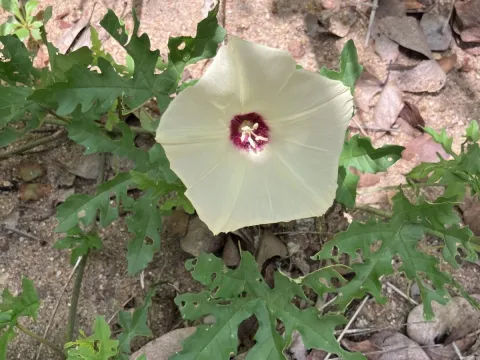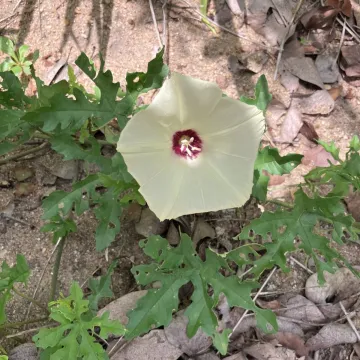

Distimake kentrocaulos
Distimake kentrocaulos
Description
Distimake kentrocaulos is a vigorous herbaceous vine belonging to the Convolvulaceae family. Historically classified within the Ipomoea genus, recent taxonomic revisions have moved it to the Distimake genus. As a perennial climber, it is characterized by rapid growth rates and a robust ability to colonize available habitats within its native tropical range.
The plant originates from the tropical regions of Central and South America, where it thrives in warm and humid environments. Its cultivation is primarily restricted to tropical and subtropical zones, as Distimake kentrocaulos is extremely sensitive to frost and cold weather. In its natural habitat, it is typically found in secondary forests and riparian zones where sunlight is abundant.
Botanically, the plant features cordate or palmately lobed leaves that facilitate high photosynthetic efficiency. The stems can be woody at the base and often exhibit thorny or hirsute structures, from which its specific name originates. The flowers are large, funnel-shaped, and usually bloom in shades of white or light purple, serving as a significant source of nectar for local pollinators.
Agricultural success depends on providing well-drained, nutrient-rich soil with a slightly acidic pH. The primary agronomic requirement is the provision of vertical structures such as trellises or supports to allow the vines to climb effectively. Regular irrigation is necessary during the active growing season, and protection from strong winds is recommended to prevent structural damage to the climbing stems.
In terms of utilization, Distimake kentrocaulos is valued both for its aesthetic contribution to landscape design and for potential applications in ethnopharmacology. While its use is predominantly local, research into the plant's secondary metabolites continues to uncover its chemical properties. Disease management focuses primarily on preventing fungal rot and controlling common sap-sucking pests like aphids and spider mites.
- Optimal Temperature: +22°C to +30°C.
- Light Requirement: Full sun to partial shade.
- Soil Type: Well-drained, organic-rich loam.
- Propagation: Seeds or stem cuttings.
Photo gallery