Wood Rose
Distimake tuberosus
Description
Wood Rose (scientific name Distimake tuberosus), formerly classified under the genus Ipomoea, is a vigorous perennial vine belonging to the Convolvulaceae family. This robust plant is widely recognized for its climbing habit, utilizing tendrils or simply twining its stems around available vertical supports to reach significant heights in its natural habitat.
The plant is native to the tropical regions of the Americas, spanning across Central and South America as well as the Caribbean islands. Its adaptive nature has allowed it to naturalize in various tropical and subtropical regions globally. Today, it is frequently cultivated in tropical zones for both its ornamental appeal and its interesting seed structures.
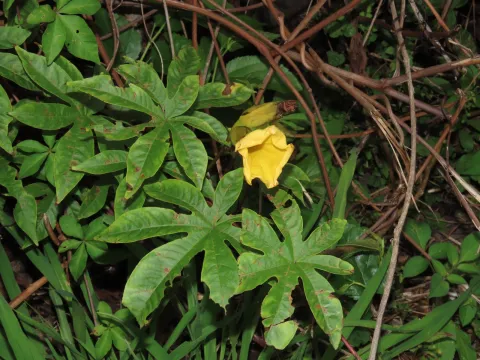
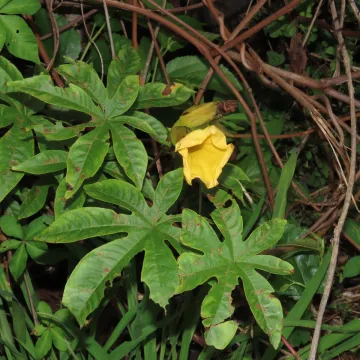
Botanically, Distimake tuberosus is distinguished by its substantial tuberous roots, which act as nutrient reserves, enabling the plant to survive adverse conditions. Its leaves are deeply palmately lobed, and the plant produces striking, funnel-shaped yellow flowers. The mature seed pods are woody and often used in dried floral arrangements, which is a hallmark of the species.
Cultivation requires a tropical or subtropical environment with full sun exposure to thrive. The soil should be well-drained, fertile, and rich in organic matter to support the rapid growth of the vine. Agronomic management involves providing sturdy trellises or fences for structural support, consistent irrigation during the growing season, and protection from frost, as the plant lacks cold hardiness.
Economically, the species is primarily valued in the ornamental plant industry. While not a major food crop, the tubers have historically been referenced in localized ethnobotanical practices. In terms of protection, the primary concerns include managing soil moisture to prevent root rot and monitoring for common greenhouse or garden pests such as aphids and mites, which can infest the dense foliage.
Photo gallery