Dombeya wallichii
Dombeya wallichii
Description
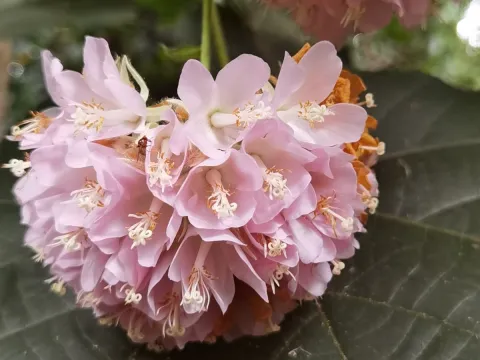
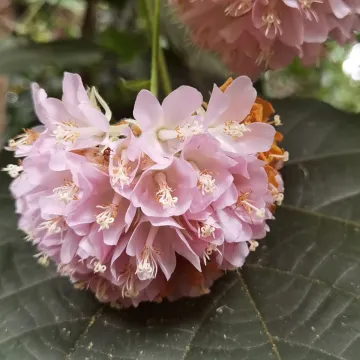
Dombeya wallichii is a striking evergreen shrub or small tree belonging to the Malvaceae family. Frequently referred to as the "pink ball" or "tropical hydrangea," it is highly prized in horticulture for its spectacular, pendulous, globe-shaped flower clusters that bloom profusely, covering the branches in a vibrant display during the cooler months.
Native to East Africa and Madagascar, this species thrives in tropical and subtropical environments. While it is predominantly used as an ornamental plant, its cultivation requires specific microclimatic conditions. In temperate regions, it is successfully managed in greenhouses and conservatories, where temperatures can be strictly controlled to mimic its natural, frost-free habitat.
Botanically, the plant features large, heart-shaped, pubescent leaves that provide a lush appearance. The inflorescences are composed of numerous small, fragrant, rose-pink flowers arranged in dense umbels. These flowers are not only visually appealing but also serve as a significant source of nectar for local pollinators, making the species an integral part of its native ecosystem.
To ensure optimal growth and productivity, the following agronomic practices must be considered:
- Soil Requirements: Prefers fertile, well-draining loamy soils with a slightly acidic to neutral pH.
- Watering: Requires consistent moisture during the growing season, but soil drainage is critical to prevent root suffocation.
- Light Exposure: Thrives in bright, filtered light; excessive exposure to harsh afternoon sun can lead to leaf scorch.
- Pruning: Annual pruning immediately after flowering is essential to maintain a compact shape and encourage vigorous branching for the next season.
The primary horticultural use of Dombeya wallichii is as an ornamental specimen in landscaping and interior garden design. Its unique form and seasonal fragrance make it a focal point in public parks and botanical collections. Furthermore, it serves as a valuable nectar-producing plant, supporting local biodiversity in regions where it is cultivated outdoors.
Common pests include spider mites and mealybugs, which are particularly prevalent in lower-humidity environments. Additionally, poor drainage can lead to soil-borne fungal pathogens causing root rot. Effective management involves maintaining adequate air circulation, monitoring leaf surfaces for early signs of infestation, and implementing integrated pest management (IPM) strategies to protect the health of the plant.
Photo gallery