Dracophyllum paludosum
Dracophyllum paludosum
Description
Dracophyllum paludosum is a distinctive, slow-growing evergreen shrub belonging to the family Ericaceae. Known for its unique appearance that mimics conifers or miniature trees, this species is endemic to the Chatham Islands, where it thrives in challenging, waterlogged environments such as peat bogs and coastal heathlands.
The native habitat of Dracophyllum paludosum is characterized by high humidity, acidic soils, and cool maritime temperatures. Because of these specific natural conditions, the plant has evolved to survive in nutrient-poor substrates, relying on its specialized root system to absorb minerals efficiently despite the harsh environment.
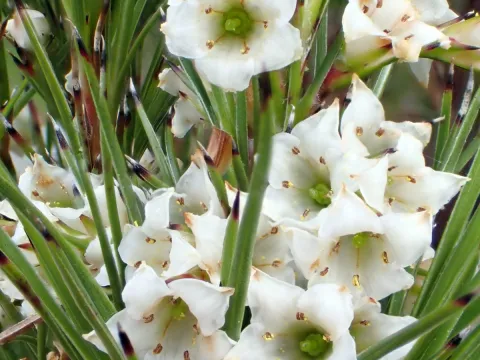
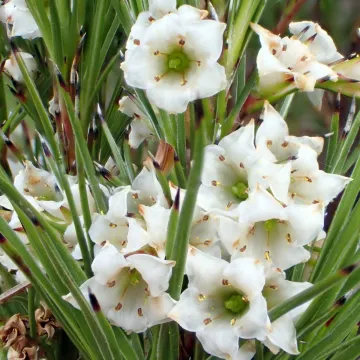
Botanically, the species features narrow, grass-like or needle-like leaves arranged in dense rosettes or clusters along the stem. The plant produces small, white or creamy inflorescences that contrast beautifully with the darker foliage. As a shrub, it maintains a compact, woody structure that develops over many years due to its inherently slow metabolic rate.
Successful cultivation in a nursery or private garden requires precise environmental control to replicate the Chatham Islands climate.
- Maintain high soil and air humidity levels.
- Utilize an acidic, well-draining peat-based growing medium.
- Protect from intense, direct sunlight, especially in warmer climates.
- Ensure constant monitoring for root pathogens that thrive in wet conditions.
The primary use of Dracophyllum paludosum is within botanical research and specialized collections for rare or endangered flora. Pests and diseases are not widely documented in commercial agricultural settings, though the species is vulnerable to root rot if drainage is insufficient, as well as competition from invasive weed species in its wild native habitat.
Photo gallery