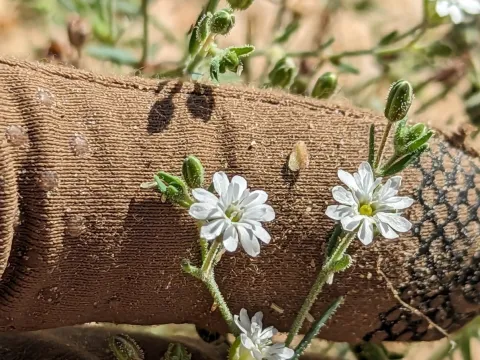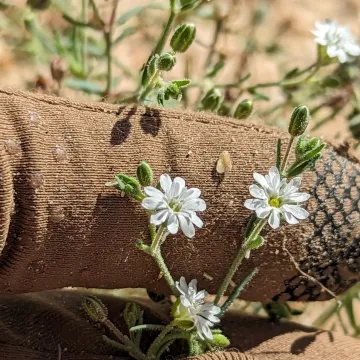
Drymaria arenarioides
Drymaria arenarioides Willd. ex Schult.
Description
Drymaria arenarioides is a perennial herb belonging to the Caryophyllaceae family. While it is not a cultivated agricultural crop, it is a significant plant of concern in agronomy and animal husbandry due to its extreme toxicity, which poses a lethal threat to grazing livestock across its range.
The native distribution of this species is primarily located in the arid and semi-arid regions of northern Mexico and adjacent areas in the southwestern United States. It is highly adapted to sandy, rocky, and nutrient-poor soils, thriving in environmental conditions where other plant species struggle to establish themselves.
Botanically, Drymaria arenarioides presents as a low-growing, mat-forming plant with slender stems and small, opposite leaves. Its small, white flowers are inconspicuous but highly effective in reproduction, allowing for rapid seed dispersal by wind, water, and animal movement, which facilitates its spread throughout open rangelands.
The primary agricultural challenge associated with this plant is its potent toxicity. Grazing animals, particularly cattle and sheep, often consume it inadvertently. The toxins contained within the plant tissues can cause severe systemic failures in livestock, leading to sudden death or long-term health decline, making the management of this species a top priority for range managers.
Effective management and control measures for this weed species include:
- Strict avoidance of infested grazing areas until the plant is eradicated.
- Manual removal of the plants, ensuring the entire root system is pulled to prevent regrowth.
- Strategic application of herbicides that target broad-leaved weeds without harming desirable forage grasses.
- Monitoring potential entry points where seed may be transported by agricultural machinery or during livestock movement.
Photo gallery