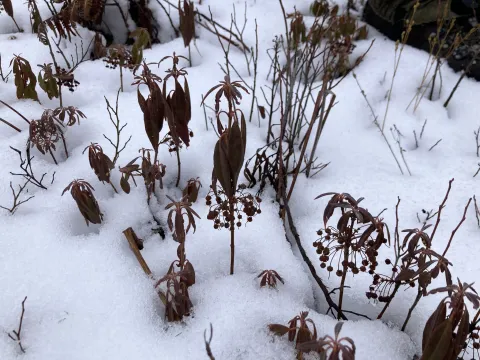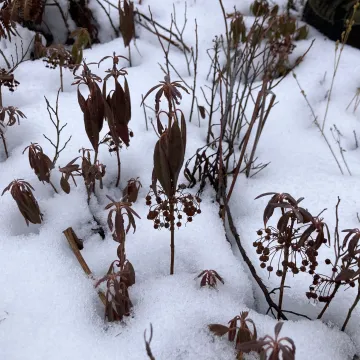

Sheep laurel
Kalmia angustifolia L.
Description
Sheep laurel (Kalmia angustifolia L.) is a perennial evergreen shrub belonging to the Ericaceae family. Known for its distinct cluster of cup-shaped flowers and glossy foliage, it is widely utilized in horticulture as an ornamental plant in temperate climate gardens.
The species is native to eastern North America, ranging from Canada to the United States. Its natural habitat includes bogs, damp woods, and rocky areas. Because of its specific environmental needs, it is categorized as an ericaceous plant that thrives in acidic, nutrient-poor conditions similar to those of rhododendrons.
Botanically, the plant is characterized by simple, leathery leaves that are arranged in whorls or opposite pairs. The flowers are small, cup-shaped, and usually vibrant pink or magenta. The shrub typically grows to a height of about 0.5 to 1.5 meters, maintaining a dense, spreading habit that makes it suitable for foundation plantings.
Agricultural and gardening requirements include:
- Soil: Highly acidic (pH 4.0–5.5) and well-draining, with a high concentration of organic matter like peat moss.
- Light: Partial shade is optimal to prevent foliage scorch while maintaining moisture levels.
- Water: Constant moisture is essential, though standing water should be avoided.
- Fertilization: Use only fertilizers specifically designed for acid-loving plants to avoid nutrient imbalance.
The primary use of Kalmia angustifolia is ornamental, serving as a focal point in shade gardens, woodland borders, and alpine rock gardens. It is important to note that the plant contains grayanotoxins, which are highly toxic to humans and livestock if ingested; therefore, caution is advised when planting in gardens accessible to pets.
Common pests and diseases include leaf spot fungi, which often appear in poorly ventilated conditions, and various aphids that target new growth. Maintenance should prioritize improving air circulation around the plants and removing any infected foliage promptly to prevent the spread of pathogens.
Photo gallery