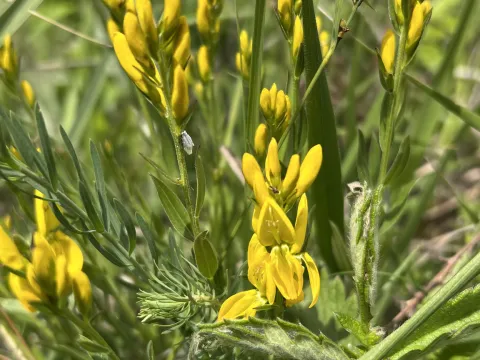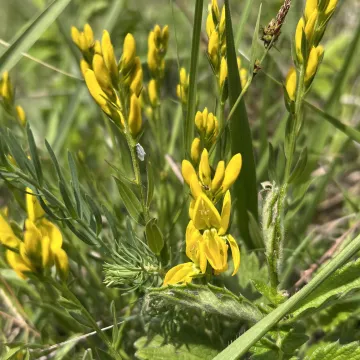
Dyer's greenweed
Genista tinctoria L.
Description
Dyer's greenweed (Genista tinctoria L.) is a perennial subshrub belonging to the Fabaceae family. It typically grows to a height of 30–70 cm, featuring branching stems and lanceolate leaves. The plant is highly recognizable during its blooming season, when it produces dense, terminal racemes of bright yellow flowers that are significant for honey production and aesthetic appeal.
Originating from Europe, Western Siberia, and Western Asia, this species has adapted to a wide range of habitats, including dry meadows, forest edges, and sandy terrains. Its evolutionary traits allow it to survive in nutrient-poor environments, making it a robust candidate for restoration projects and specialized agricultural cultivation in temperate zones.
The crop thrives in well-drained, sandy, or light loam soils. Proper moisture management is the most critical factor, as Genista tinctoria cannot tolerate waterlogged conditions which lead to root rot. High solar exposure is required for optimal flowering, which correlates with the plant's natural preference for open, sunny environments where it faces minimal competition from taller vegetation.
Agrotechnical management involves initial weed control during the seedling stage, after which the plant becomes quite competitive. As a legume, it performs nitrogen fixation, reducing the need for synthetic nitrogen fertilizers. Pruning after the flowering period helps maintain a compact form and promotes denser vegetative growth in the subsequent season, which is crucial for dye-harvesting purposes.
Historically, the plant has been used as a primary source of yellow dye for fabrics, as indicated by its common name. In modern times, it is utilized in phytotherapy for its diuretic and vasoconstrictive properties, as well as in landscaping for erosion control on slopes. Its ability to thrive in challenging environments makes it an increasingly popular choice for sustainable land management.
Common issues encountered during cultivation include:
- Powdery mildew, especially in humid and poorly ventilated locations.
- Aphid infestations that cluster on young, tender growth.
- Leaf-feeding beetles that may cause significant aesthetic and structural damage.
- Root fungi induced by poor soil drainage and compacted substrates.
Photo gallery