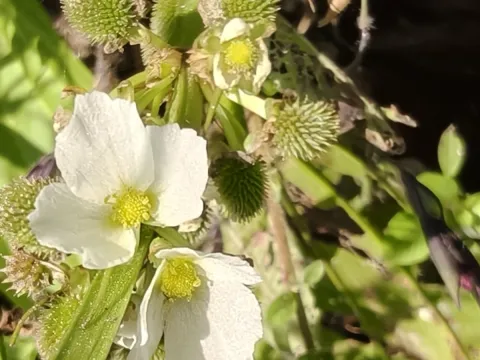
Echinodorus subalatus
Echinodorus subalatus
Description
Echinodorus subalatus is a perennial herb belonging to the Alismataceae family. As an aquatic and semi-aquatic plant, it is known for its ability to thrive in both submerged conditions and wet, muddy substrates. This species is highly valued in the agricultural sector for its aesthetic qualities and its efficiency in water management systems.
Originating from the tropical regions of Central and South America, Echinodorus subalatus typically populates riversides, marshes, and seasonal floodplains. Its ability to survive significant water level fluctuations makes it a resilient candidate for controlled environment agriculture and aquaponics setups where environmental stability is paramount.
Botanically, the plant features a basal rosette of leaves with prominent, parallel venation, which provides structural integrity for underwater growth. It propagates through both seed production and vegetative offsets on its inflorescence stalks. Its roots are designed to absorb nutrients directly from the substrate, requiring an environment rich in organic matter to reach peak maturity.
The cultivation of Echinodorus subalatus requires precise control over its habitat. For optimal development, producers should focus on:
- Maintaing a temperature range between 22°C and 28°C.
- Using a nutrient-dense, slightly acidic substrate.
- Providing high-intensity lighting for photosynthetic efficiency.
- Ensuring steady water flow to facilitate gas exchange and nutrient distribution.
Commercially, this crop is primarily used in landscaping, botanical collection, and environmental engineering for bio-filtration purposes. Typical pests include small snails and fungal pathogens that affect the leaf tissues under stagnant water conditions. Disease management relies heavily on preventing substrate compaction and ensuring the proper filtration of the growing medium to keep the plant healthy and vigorous.
Photo gallery