Common water hyacinth
Eichhornia crassipes (Mart.) Solms
Description
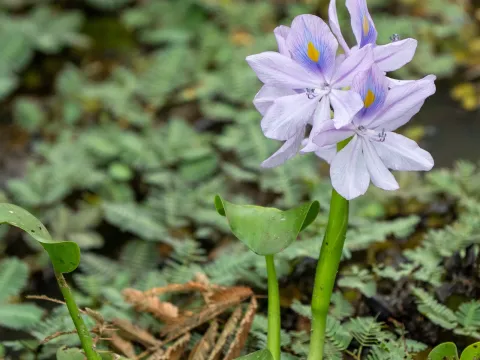
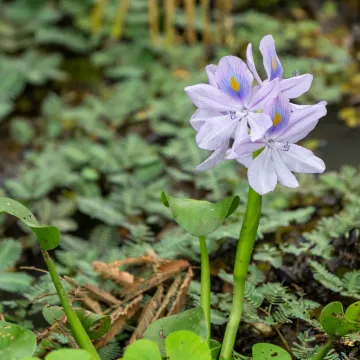
Common water hyacinth (Eichhornia crassipes) is a perennial aquatic plant belonging to the Pontederiaceae family. Recognized as one of the fastest-growing plants globally, it typically floats on the surface of freshwater bodies, utilizing its specialized structure to colonize water surfaces efficiently.
Originating from the Amazon basin in South America, this species has naturalized in tropical and subtropical regions worldwide. While often categorized as an invasive species in wild ecosystems, its agricultural value as a productive crop for nutrient recovery and biomass generation is widely acknowledged in controlled aquaculture.
The morphology of the plant is defined by its bulbous, spongy petioles filled with aerenchyma tissue, providing excellent buoyancy. Its dense, feathery root system serves as an efficient filtration interface, capable of extracting significant amounts of nutrients and pollutants directly from the water column.
Successful cultivation requires high water temperatures, ranging from 22°C to 28°C, and abundant sunlight. In agricultural settings, nutrient-rich water is essential for high productivity. Good management practices include regular thinning of the stand to prevent over-crowding and to maintain optimal growth rates for continuous biomass harvesting.
The economic utility of water hyacinth is diverse: it is extensively used in phytoremediation systems to treat municipal and agricultural wastewater. Additionally, the harvested biomass is utilized for composting, soil amendment, biogas production, and, after processing, as a supplementary protein-rich feed for livestock.
- Rapid biomass accumulation.
- High efficacy in water purification.
- Requires warm climates for survival.
- Ease of propagation via stolons.
Crop health is primarily challenged by insect herbivores and, in stagnant or overly dense populations, by fungal leaf blight. Effective management of water quality and plant density is crucial to mitigate disease risks and ensure the long-term sustainability of water hyacinth cultivation systems.
Photo gallery