Eragrostiella bifaria
Eragrostiella bifaria
Description
Eragrostiella bifaria is a perennial grass species belonging to the Poaceae family. While not a conventional high-yield crop in industrial agriculture, it serves as a critical forage resource in arid and semi-arid environments where other grasses struggle to survive, providing essential grazing for livestock.
The origin of this species is traced to tropical Asia, primarily inhabiting the diverse landscapes of India and surrounding countries. It naturally occurs in dry, open grasslands and savannas, where it has developed significant resilience to environmental stressors like prolonged heat and irregular precipitation patterns.
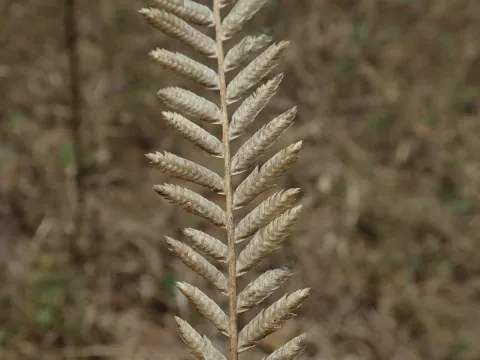
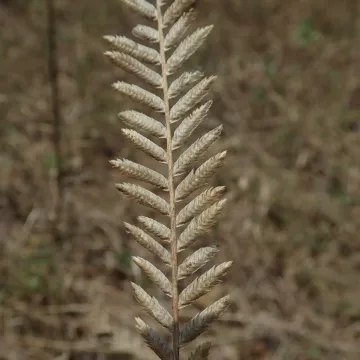
Botanically, the plant grows in compact tufts with slender, linear leaves. Its most distinctive feature is the inflorescence, which consists of distichous (two-ranked) spikelets arranged along the rachis. This architectural efficiency helps the plant maximize seed dispersal and survive in harsh, competitive environments.
Regarding climate and soil, Eragrostiella bifaria thrives in well-drained, sandy, or rocky soils. It is remarkably drought-tolerant, requiring high light intensity to optimize photosynthesis. Proper agronomic management involves avoiding overgrazing and ensuring that soil moisture levels do not remain at saturation, as the roots are highly susceptible to rot in stagnant water.
Economically, its utility is centered on its role in silvopastoral systems and as a soil stabilizer. Although it requires minimal maintenance, like any grass crop, it can be affected by specific agricultural threats. These include foliar fungal pathogens during monsoon transitions and various grass-feeding insects that can significantly reduce leaf density during the peak growth season.
Photo gallery