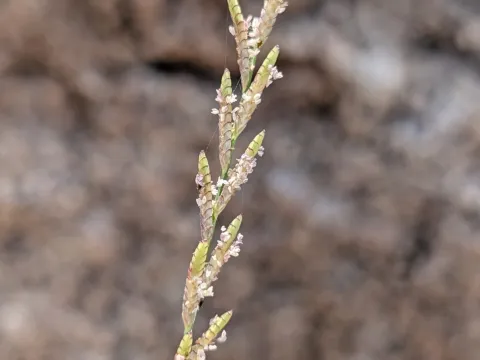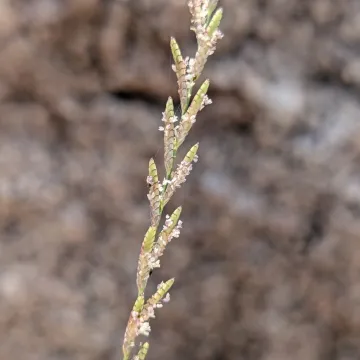
Eragrostiella brachyphylla
Eragrostiella brachyphylla
Description
Eragrostiella brachyphylla is a perennial grass species belonging to the Poaceae family. In agricultural and botanical contexts, it is recognized as a hardy grass that contributes significantly to the biodiversity of natural pastures and grassland ecosystems in its native regions.
The plant originates primarily from the tropical regions of South Asia, specifically India. It is well-adapted to the monsoonal climate cycles, thriving in environments that experience distinct dry and wet seasons. Its natural distribution is mainly found on open, rocky, or sandy terrains where competitive pressure from taller vegetation is limited.
Botanically, Eragrostiella brachyphylla is characterized by its tufted growth habit and short, rigid, overlapping leaves that help the plant conserve water. The root system is deep and fibrous, which is a critical adaptation for survival in nutrient-poor soils and helps in preventing soil erosion in semi-arid environments.
Cultivation requirements for this grass include well-drained, sandy, or stony soil compositions. It is highly drought-tolerant and requires minimal intervention once established. Agronomic management involves maintaining optimal grazing pressure to prevent overgrazing while ensuring the soil structure remains intact to support its perennial growth.
The primary agricultural use of this plant is as a fodder source for livestock grazing in extensive production systems. While not as nutrient-dense as cultivated forage crops, its resilience provides a reliable supply of biomass in areas where more demanding species would fail to survive due to water scarcity.
Common issues affecting this species include susceptibility to fungal infections during high humidity periods, which can lead to leaf blight. Pest pressure usually involves grasshoppers and stem borers, which are common in tropical grasslands, making regular monitoring of field health essential for maintaining the quality of the stand.
Photo gallery