Description
The King of the Alps (Eritrichium nanum) is a perennial herbaceous plant belonging to the Boraginaceae family. It is widely considered one of the most prestigious plants for alpine gardens due to its extreme beauty and the challenging nature of its cultivation.
This plant is native to the high-altitude regions of Europe and Asia. Its natural habitat includes rocky crevices and scree slopes at high elevations. This specialized environment has equipped the plant with high resilience to extreme temperatures and high solar radiation, but makes it sensitive to low-altitude conditions.
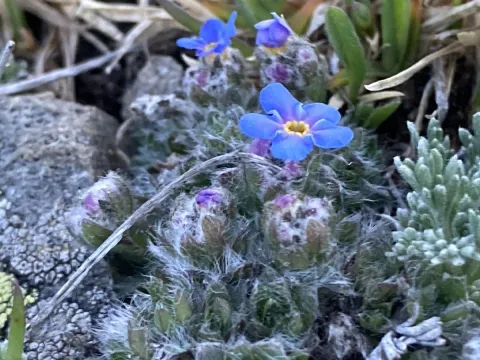
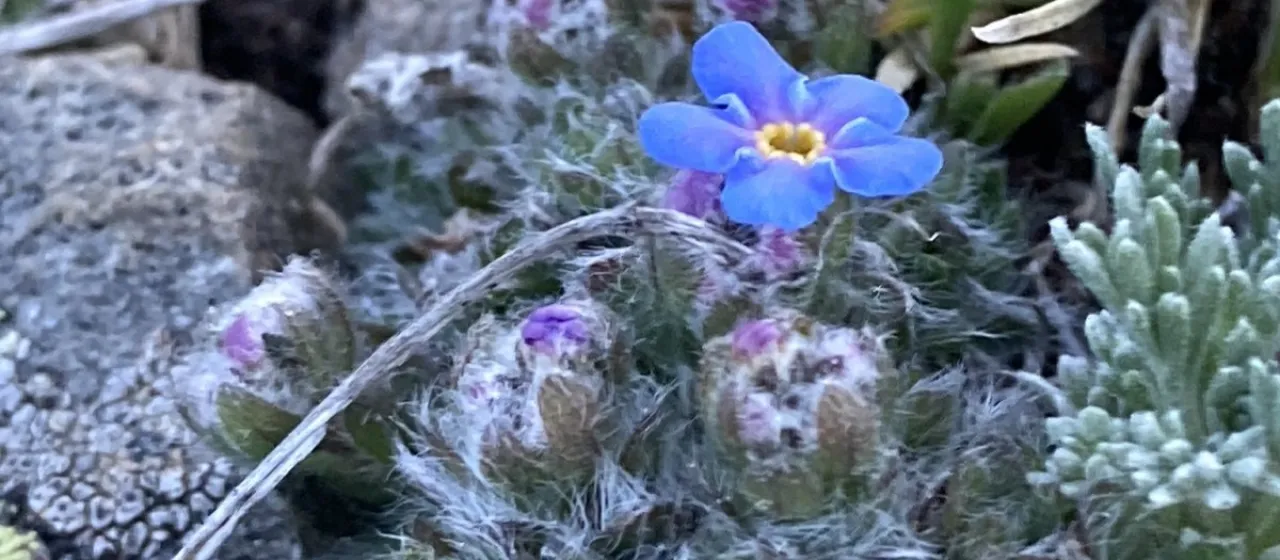
Botanically, it forms dense, low-growing cushions. Its leaves are covered with fine, silvery hairs that help minimize transpiration. During its blooming season, the plant produces a mass of intense sky-blue flowers with small yellow centers, creating a vibrant display that creates a stark contrast against gray rocks.
Cultivation requires precision; the soil must be extremely well-drained and gritty to prevent root rot. It is essential to maintain a poor, mineral-rich substrate and avoid organic fertilizers. The plant thrives in full sun but requires good air circulation, as stagnant, humid air can lead to rapid decline.
The primary use of Eritrichium nanum is in professional alpine gardening and specialty rock gardens. Diseases are usually limited to crown rot caused by overwatering or soil humidity. Pests are minimal, though gardeners should monitor for snails and slugs that may damage the cushion during the early stages of the growing season.
Photo gallery