Description
The stemless stork's bill (Latin: Erodium acaule) is a herbaceous perennial belonging to the Geraniaceae family. In agriculture, it is recognized as a resilient species capable of thriving in marginal lands, serving as a reliable ground cover and forage component in regions characterized by severe water scarcity.
Originating from the Mediterranean basin and North Africa, the plant is naturally adapted to the harsh environmental conditions of arid and semi-arid zones. It is commonly found in rocky substrates and sandy terrains, where it demonstrates high tolerance to saline soils and low nutrient availability.
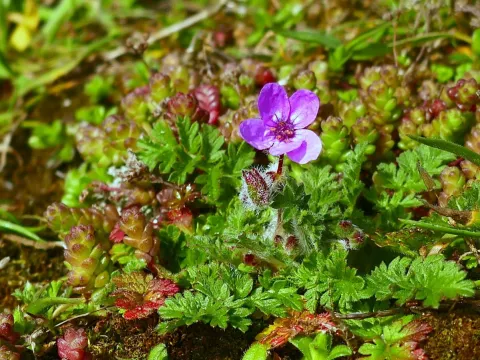
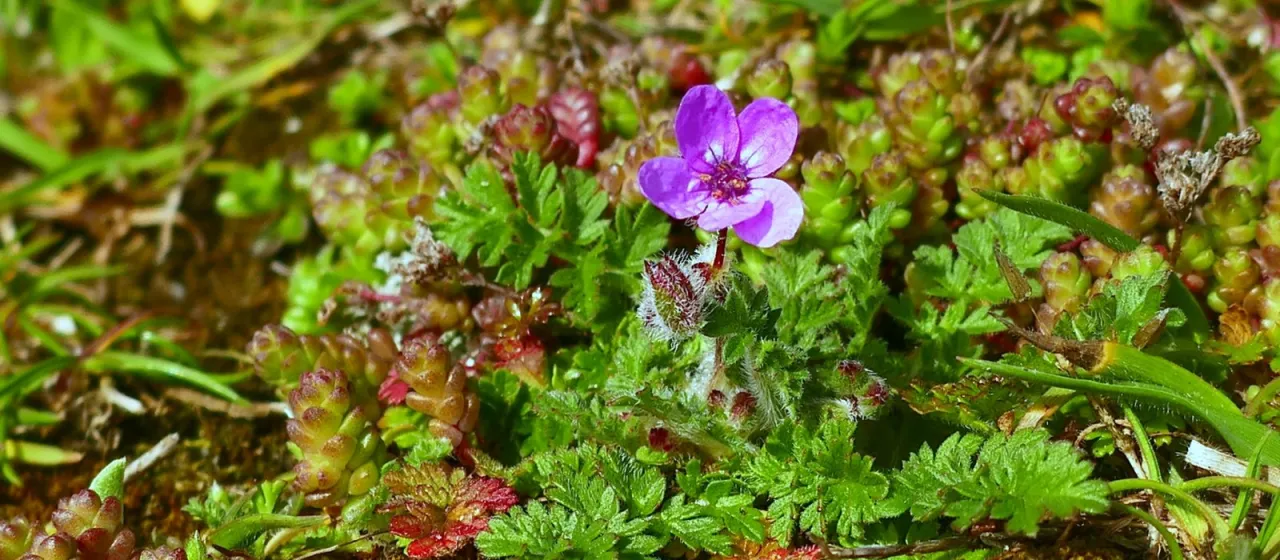
From a botanical perspective, the plant is distinguished by a basal rosette of leaves that stays close to the ground to optimize moisture retention. It produces small, vibrant flowers and exhibits a long taproot, which is a critical adaptation for sourcing water from deeper soil horizons. Its reproductive cycle is well-synchronized with the rainfall patterns of its native range.
Agronomic requirements for Erodium acaule are relatively modest. It prefers well-drained, porous soils with a neutral or alkaline pH. Planting should focus on weed control during the seedling stage, as the plant is slow to establish but becomes highly competitive and hardy once its deep root system is fully developed.
The species is primarily utilized for improving pasture quality in arid zones, preventing soil erosion, and providing a source of secondary metabolites for the herbal industry. While generally resistant to most pests, farmers should monitor for occasional occurrences of powdery mildew in high-humidity periods, although this is rarely a significant threat.
- Excellent drought tolerance
- Soil erosion control properties
- Deep taproot for water access
- High adaptability to poor soils
Photo gallery