Description
Stork's bill (Erodium ciconium) is an annual or biennial herbaceous plant belonging to the Geraniaceae family. In agricultural science, it is recognized for its adaptive capacity in various ecosystems and its role as a hardy forage plant in arid or semi-arid grazing environments.
The origin of this species traces back to the Mediterranean region, with its natural range extending across Europe and parts of Asia. It has successfully naturalized in various regions due to its ability to thrive in poor soils and withstand significant fluctuations in precipitation. It is most commonly found in open fields, pastures, and rocky slopes.
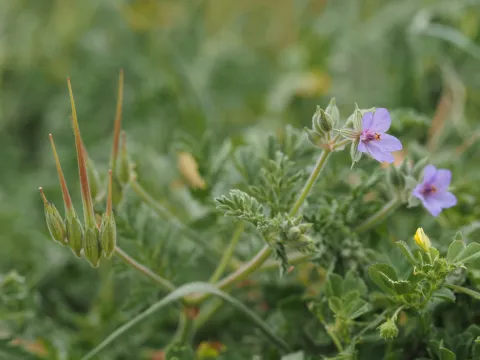
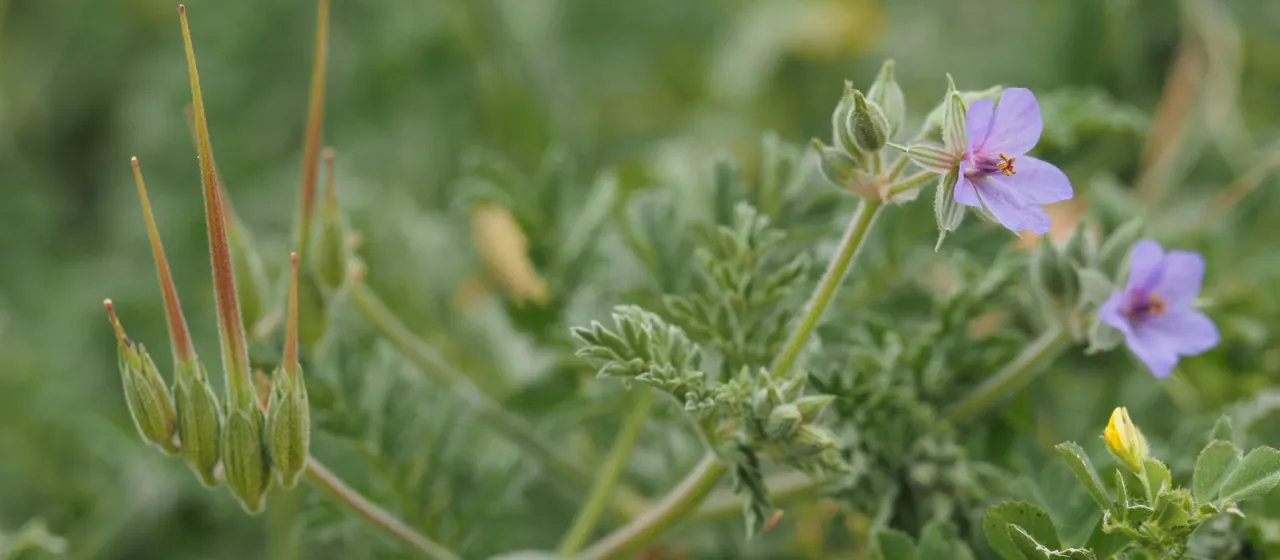
Botanically, the plant is distinguished by its basal rosette of finely divided, feathery leaves and trailing stems. Its most iconic feature is the long, beaked fruit that gives the plant its common name. This specialized structure facilitates the mechanical drilling of the seed into the soil, which is an evolutionary adaptation for survival in dry terrains.
Cultivation requirements for Erodium ciconium focus on well-drained, neutral to slightly alkaline soils. The plant requires minimal irrigation once established and performs well in direct sunlight. Excessive nitrogen application is generally avoided as it promotes leaf growth at the expense of root development and seed production.
The agricultural usage of stork's bill includes:
- Usage as a nutritious component in wild forage mixtures.
- Utilization as a honey plant for apiaries.
- Potential application as a medicinal raw material in pharmaceutical studies.
Photo gallery