Description
Erodium foetidum, commonly known as the stinking stork's bill, is a perennial herb belonging to the Geraniaceae family. The plant is botanically noted for its distinct glandular hairs, which release a pungent, musk-like odor when disturbed, an evolutionary trait likely intended to deter herbivores.
This species is native to the high-altitude mountainous regions of Europe, particularly the Pyrenees. It has evolved to thrive in specialized niches, such as limestone crevices and rocky screes, where nutrient availability is low, but drainage is excellent, reflecting its adaptation to challenging alpine environments.
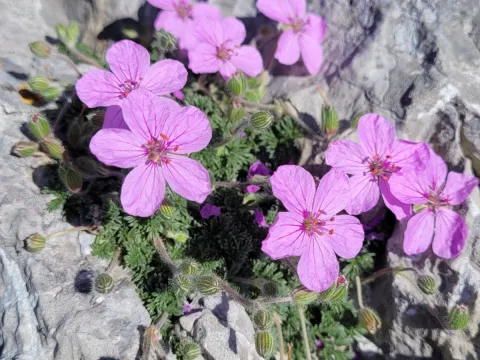
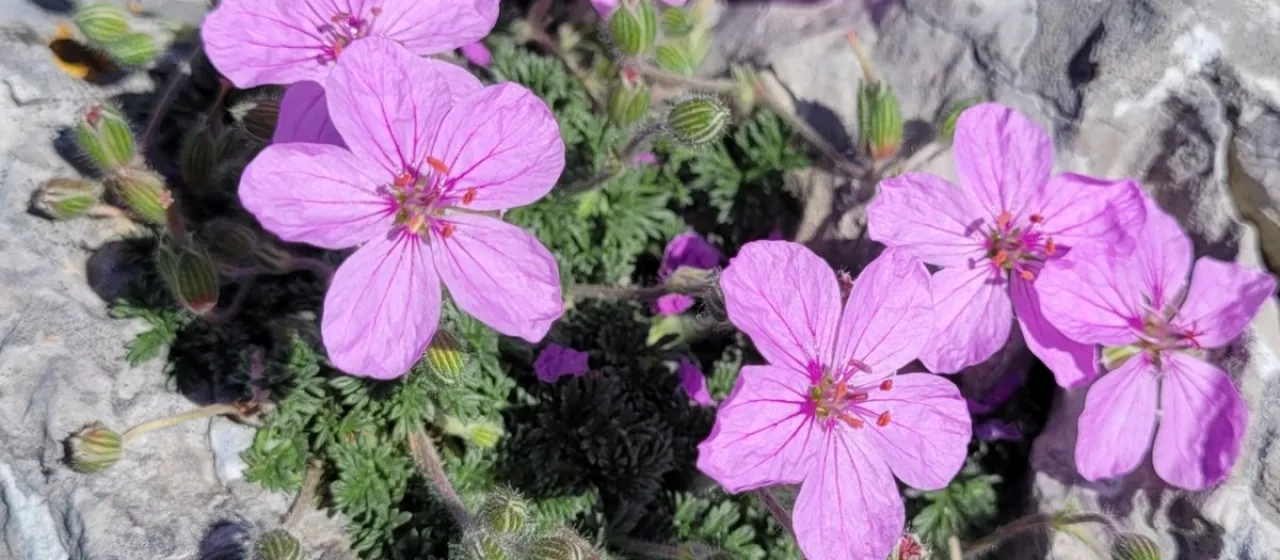
The morphology of Erodium foetidum consists of a compact basal rosette of pinnately lobed leaves. The flowers are delicate, typically ranging from white to pale pink or purple, featuring the classic symmetry of the genus. The fruit is a long, beak-like schizocarp, which dries and coils to propel seeds into rock cracks, ensuring successful reproduction.
Agronomically, the plant requires specific environmental conditions to thrive under human care. It demands well-draining, calcareous soil and cannot tolerate stagnant water, which often leads to crown rot. Providing a gritty substrate and ample sunlight is essential for maintaining the vigor and compactness of the plant.
Host-plant utilization for Erodium foetidum is primarily restricted to ornamental horticulture, specifically for specialized rock gardens and xeriscaping. It is highly valued by alpine plant enthusiasts for its ability to withstand drought and its unique, refined appearance, which contrasts well with more robust alpine species.
- Needs full sun exposure for optimal growth
- Excellent drought resistance
- Sensitive to excessive organic matter in soil
- Susceptible to root rot if soil drainage is inadequate
Photo gallery