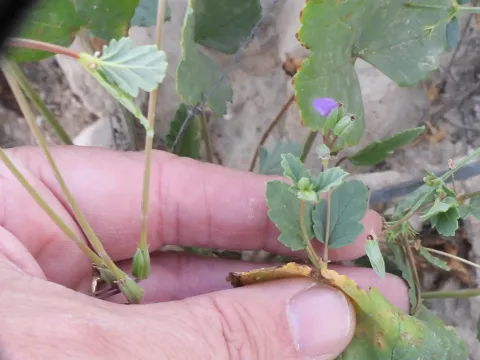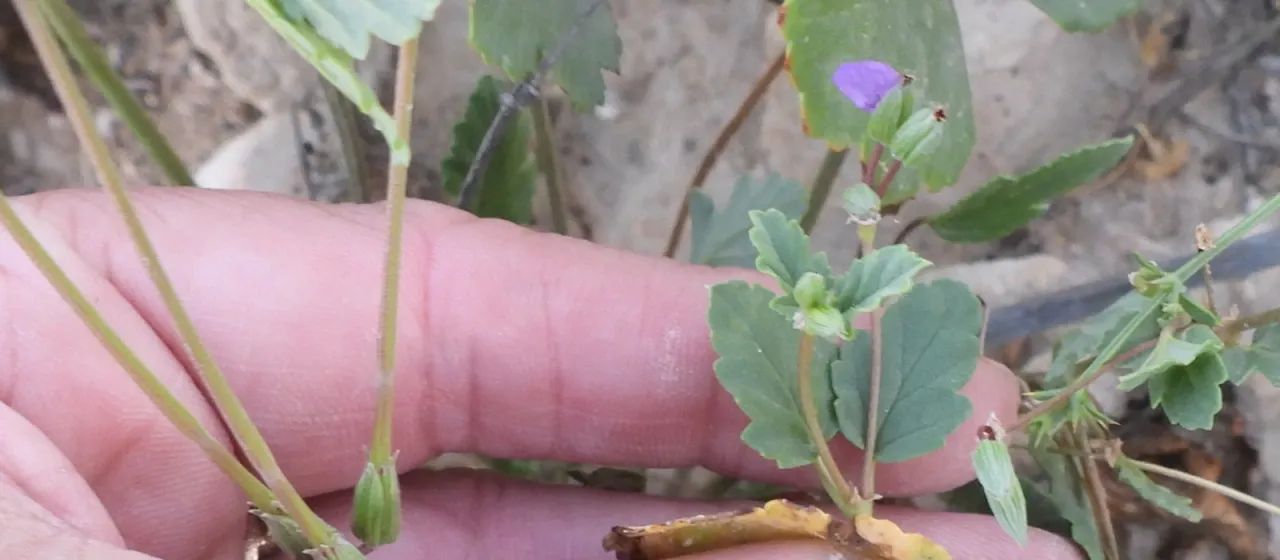
Description
Glaucous-leaved stork's-bill (Erodium glaucophyllum) is a perennial herbaceous plant belonging to the Geraniaceae family. It serves as a specialized crop adapted for extreme environments, particularly in arid and semi-arid regions where conventional agriculture faces significant water scarcity challenges.
The plant originates from the deserts of North Africa and the Middle East. It has evolved to thrive in environments with very low annual rainfall and intense solar radiation, establishing itself as a vital component of the local flora and desert grazing systems.
Botanically, the plant is characterized by its glaucous (blue-green) leaves, which are covered in fine trichomes that reduce transpiration. The flowers typically display shades of pink to purple, while the seed pods feature the elongated, beak-like shape typical of the Erodium genus. Its robust taproot allows it to tap into moisture stored deep within the sandy substrate.
Regarding agrotechnology, Erodium glaucophyllum requires well-drained, sandy soils. It is highly intolerant of waterlogging, which can lead to rapid fungal infection of the root system. The plant thrives under full sun and does not require complex fertilization, making it a low-input crop suitable for desert range management.
The primary agricultural use is as high-quality forage for camels, sheep, and goats. In regions where grass cover is sparse, this plant acts as an essential nutrient source. It is known for its ability to regenerate after grazing, provided that sustainable management practices are followed to prevent overexploitation of the arid rangelands.
- Exceptional drought resistance
- Adaptability to poor, sandy soils
- Sustainable forage for arid regions
- Low soil nutrient requirements
Photo gallery