Description
The cut-leaved stork's bill (Erodium laciniatum) is an annual herb belonging to the Geraniaceae family. In agricultural landscapes, it is recognized for its ability to thrive in diverse environments, often acting as a pioneer species that colonizes disturbed soils or fallow lands.
The species originates from the Mediterranean basin and arid regions of Western and Central Asia. Its distribution is highly dependent on light and temperature, as it is perfectly adapted to climates with distinct dry seasons, which is common in steppe and semi-desert ecological zones.
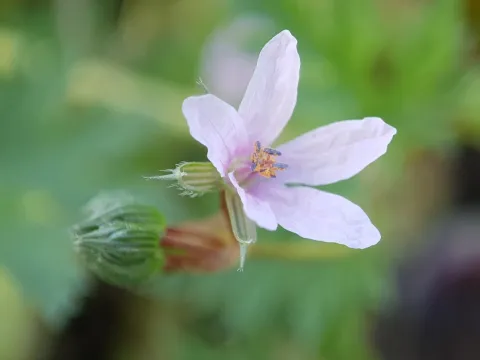
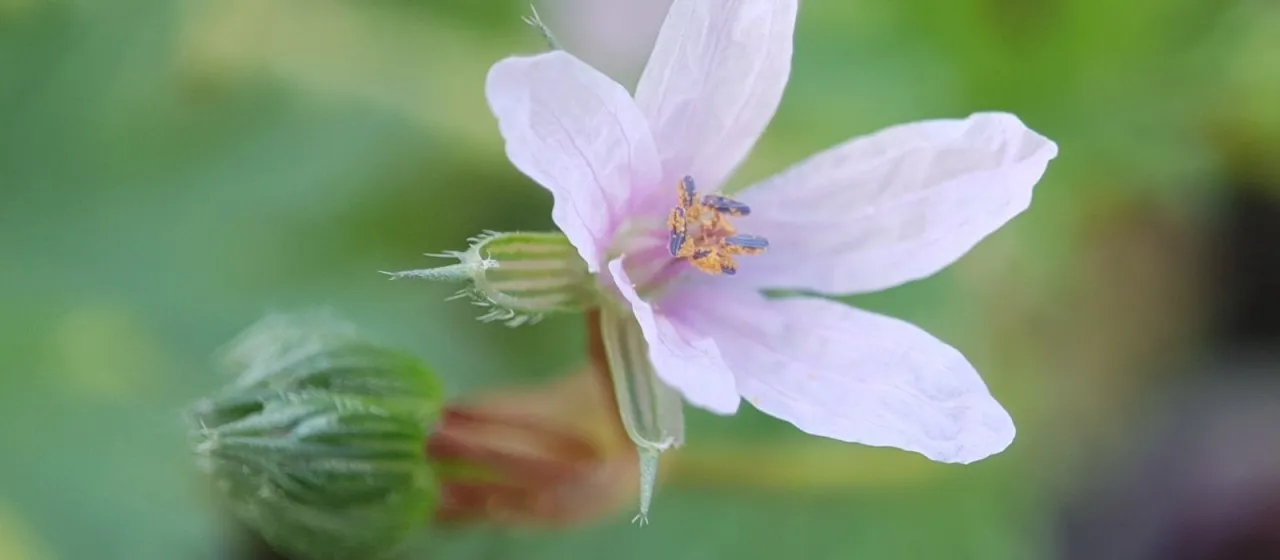
Botanically, Erodium laciniatum is defined by its deeply pinnatifid leaves and characteristic elongated fruit, which resembles a stork's beak. The flowers range from pale pink to violet and appear on loose clusters. The plant's morphology is designed to optimize water efficiency, allowing it to survive where more demanding crops might fail.
From an agrotechnical perspective, this plant requires well-drained, porous soils. While it exhibits high tolerance to salinity, its presence in arable fields is generally discouraged. Effective management involves mechanical hoeing and the maintenance of a vigorous crop canopy to shade out emerging seedlings, thereby limiting their access to sunlight.
Economically, the plant is not typically cultivated as a primary crop, but it plays a role in stabilizing soil in degraded ecosystems. Ongoing research into the species focuses on its chemical composition, as many plants within the Geraniaceae family contain compounds of interest for pharmacological and industrial applications.
- Family: Geraniaceae
- Growth cycle: Annual
- Light requirement: Full sun
- Soil type: Sandy, well-drained
- Climatic zone: Mediterranean to Arid
Photo gallery