Description
Rock storksbill (Erodium rupestre) is a perennial herbaceous plant belonging to the Geraniaceae family. Known for its distinct preference for rocky habitats, this species acts as a low-growing cushion plant, adapted to survive in extreme conditions within mountainous ecosystems.
The plant originates from the Pyrenees and other mountainous regions of Southern Europe. Its natural range is characterized by steep limestone slopes and high altitudes. These environmental conditions have shaped the plant's unique ability to thrive in nutrient-poor but well-draining substrates, making it a specialist of its habitat.
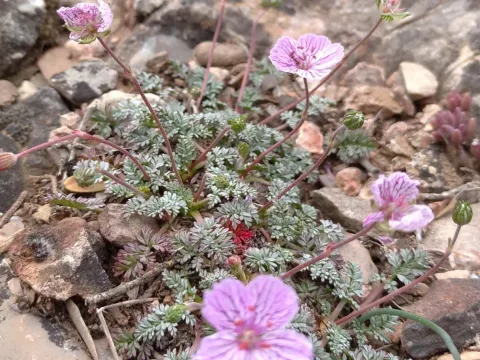
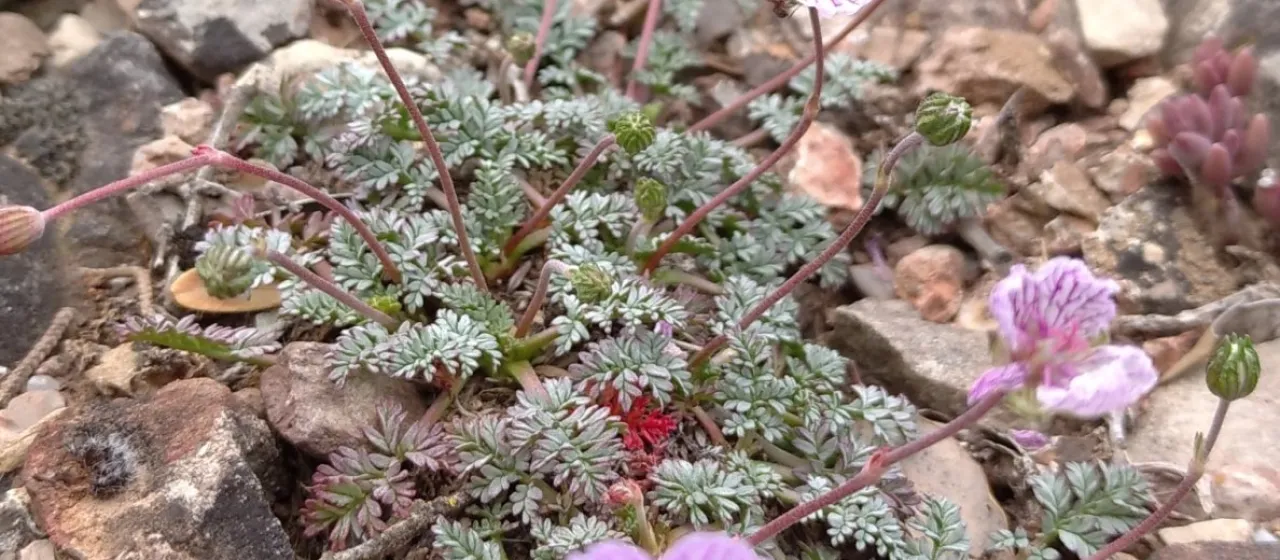
Botanically, Erodium rupestre is recognized by its dense, pinnately-lobed foliage that forms compact mats. The leaves are often pubescent, contributing to the plant's silver-green appearance. The flowers, appearing in late spring, display the typical five-petal symmetry found in the Geranium order, often featuring subtle veining that adds to their ornamental value.
Cultivation requirements are strict, focusing primarily on soil structure and drainage. To succeed in an agricultural or garden setting, the plant requires a substrate consisting of coarse grit, limestone chips, and minimal organic matter. It demands full sun exposure and is highly susceptible to root decay if drainage is not absolute, especially during dormant winter months.
This species is primarily utilized in specialized alpine gardens and rockeries, where it serves as a decorative ground cover or container plant. In terms of plant protection, the primary threats include fungal rot from excessive humidity and occasional aphid infestations. Preventive measures include ensuring good air circulation and strictly avoiding overhead watering during periods of high humidity.
Photo gallery