Description
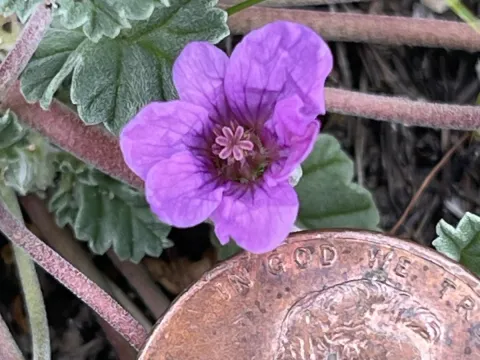
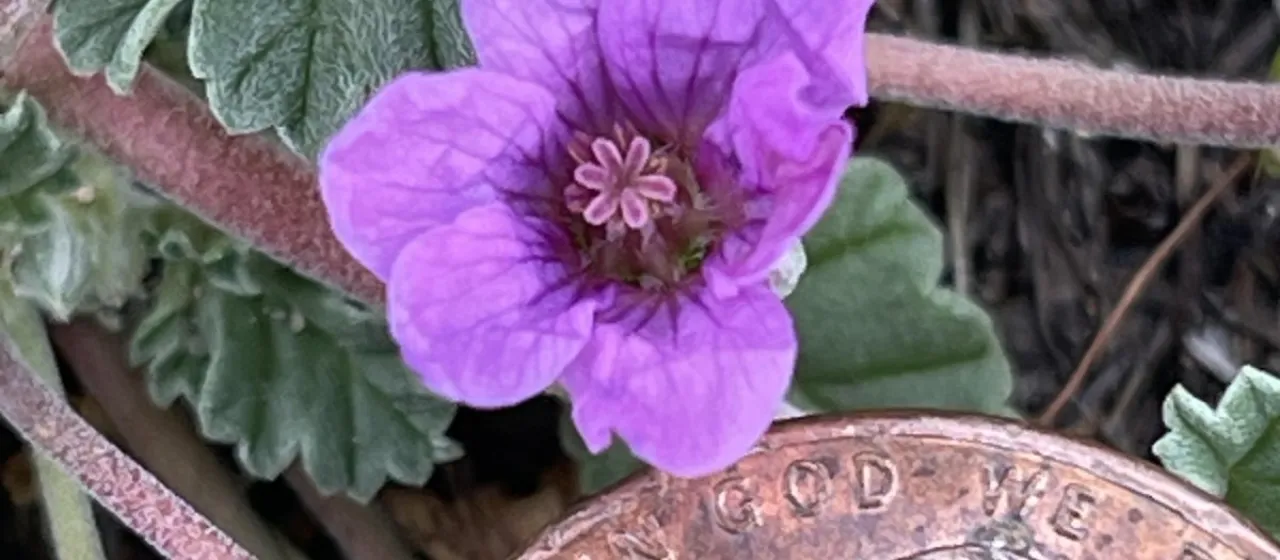
Texas stork's bill (Erodium texanum) is an annual herbaceous plant belonging to the Geraniaceae family. As a specialized member of the Erodium genus, it has evolved specific physiological mechanisms to thrive in arid and semi-arid environments where water availability is the primary limiting factor for plant growth.
Native to the southwestern United States and northern Mexico, the species is primarily found in the state of Texas. It typically inhabits open plains, gravelly hills, and sandy deserts. These locations are characterized by intense sunlight and fluctuating temperature regimes, where the plant occupies a niche as a resilient ephemeral species that maximizes its growth during short cool-season rainy windows.
Botanically, Erodium texanum is identified by its basal rosettes of leaves and distinct violet to lavender flowers. A key feature is its seed dispersal mechanism; the carpels are spirally coiled, which act as a self-planting device. When moisture levels shift, the mechanical tension in the seed head pushes the seed into the soil, ensuring higher germination success in harsh, crusted ground conditions.
Cultivation requirements focus on mimicking its natural desert habitat. It is essential to provide full sun exposure and extremely well-drained, porous soils. Unlike many traditional agricultural crops, it does not require significant nitrogen fertilization and is susceptible to root rot if moisture levels remain high for extended periods. Agrotechnical management usually involves sparse sowing strategies to accommodate its natural growth pattern.
Economically, the plant is valued for its contribution to desert pasture health. It serves as an early-season forage source for both livestock and wildlife in regions where other forage species may be dormant or absent. Furthermore, its potential in xeriscaping and land restoration projects is being explored, as it provides soil stability in semi-arid ecosystems and supports local pollinators when other food sources are scarce.
- Exceptional tolerance to extreme heat and drought.
- Unique self-burial mechanism for seeds.
- Early maturity cycle within the vegetation season.
- Low requirement for supplemental agricultural inputs.
Photo gallery