
Description
Schreber's Aster (Latin: Eurybia schreberi) is a herbaceous perennial plant belonging to the Asteraceae family. Although historically classified within the Aster genus, recent taxonomy places it within the Eurybia genus. It is widely recognized for its ability to thrive in shaded environments where many other flowering plants fail to establish.
Originating from eastern North America, this plant is naturally found in woodland habitats, forest edges, and shaded glades. Its native distribution suggests a high adaptability to temperate climates with cool, moist spring and autumn seasons. In horticulture, it is often utilized as a reliable groundcover in shaded garden settings.
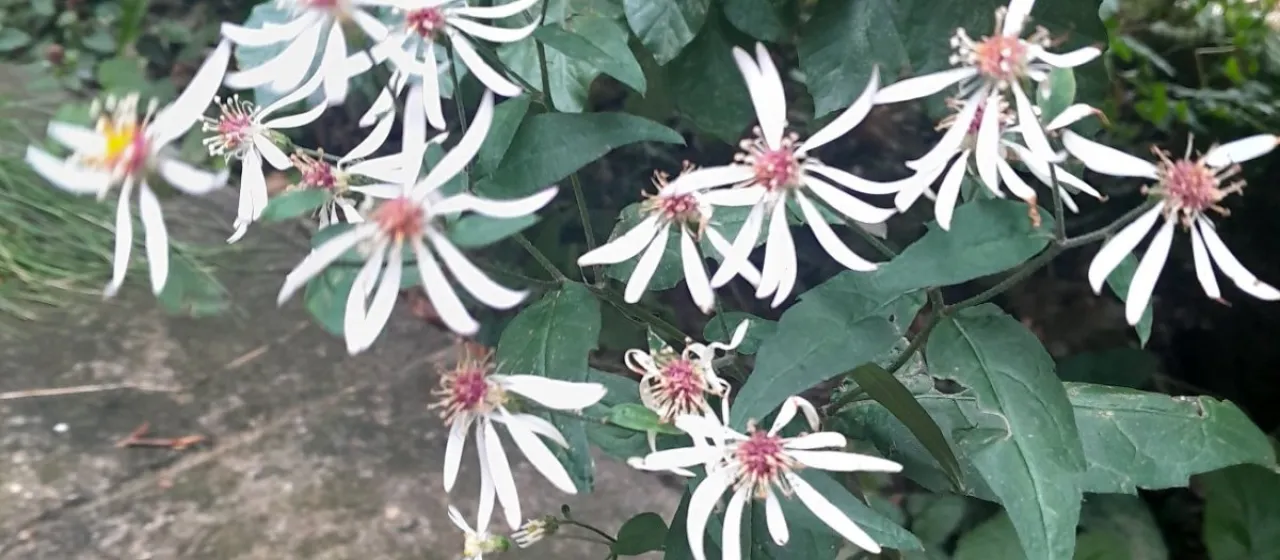
The plant features distinct heart-shaped basal leaves and upright stems that typically reach heights of 40 to 80 centimeters. Its inflorescences consist of loose clusters of white daisy-like flower heads. The blooming period usually occurs from late August to September, adding significant aesthetic value to the garden during the late season transition.
Cultivation requires fertile, well-draining soil rich in organic matter. While it is tolerant of shade, the plant performs best in filtered light conditions. Regular moisture is essential for optimal growth, although once established, the root system is quite resilient to short periods of moderate dryness.
The plant is generally robust, but gardeners should monitor for common issues such as powdery mildew, which can occur if air circulation is poor. Slugs and snails may occasionally target fresh spring foliage. Proper maintenance, including dividing established clumps every few years, ensures the long-term health and productivity of the plant in the landscape.