
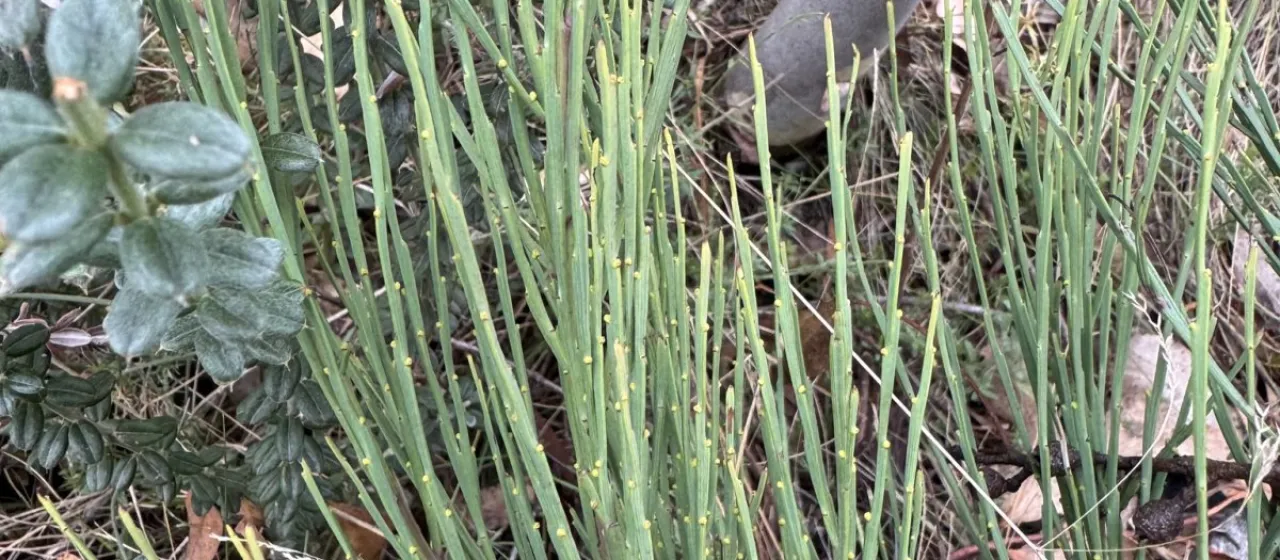
Description
The Pale-fruit ballart (Exocarpos strictus) is a perennial shrub belonging to the Santalaceae family. As a distinct representative of Australian flora, this species is well-regarded for its unique biological adaptation and structural appearance, which sets it apart from traditional agricultural crops.
The plant is native to various regions across Australia, typically occupying habitats such as dry woodlands and rocky slopes. It has evolved to thrive in nutrient-poor soils, making it a highly resilient species capable of withstanding intense environmental pressures and seasonal water shortages.
Botanically, the species is classified as a hemiparasite, meaning it derives some of its nutrients from the roots of neighboring plants while retaining its ability to perform photosynthesis through its green, branch-like stems. Its foliage is reduced, which further aids the plant in minimizing water loss in arid environments.
Cultivation of this plant requires a deep understanding of its parasitic relationship with host plants. In an agro-ecological setting, it is essential to ensure that suitable companion species are present to support the health and vigor of the Pale-fruit ballart. Soil drainage is critical, as the roots are sensitive to waterlogging.
The primary use for this species is in native landscape restoration and xeriscaping. It serves as an excellent stabilizer for fragile ecosystems and is occasionally utilized in botanical collections due to its fascinating fruit structure—a succulent pedicel that supports a small, dry nutlet at the apex.
- Family: Santalaceae
- Growth habit: Erect shrub
- Nutritional strategy: Hemiparasitic
- Climate preference: Arid to semi-arid
- Ecological significance: Biodiversity support