
Description
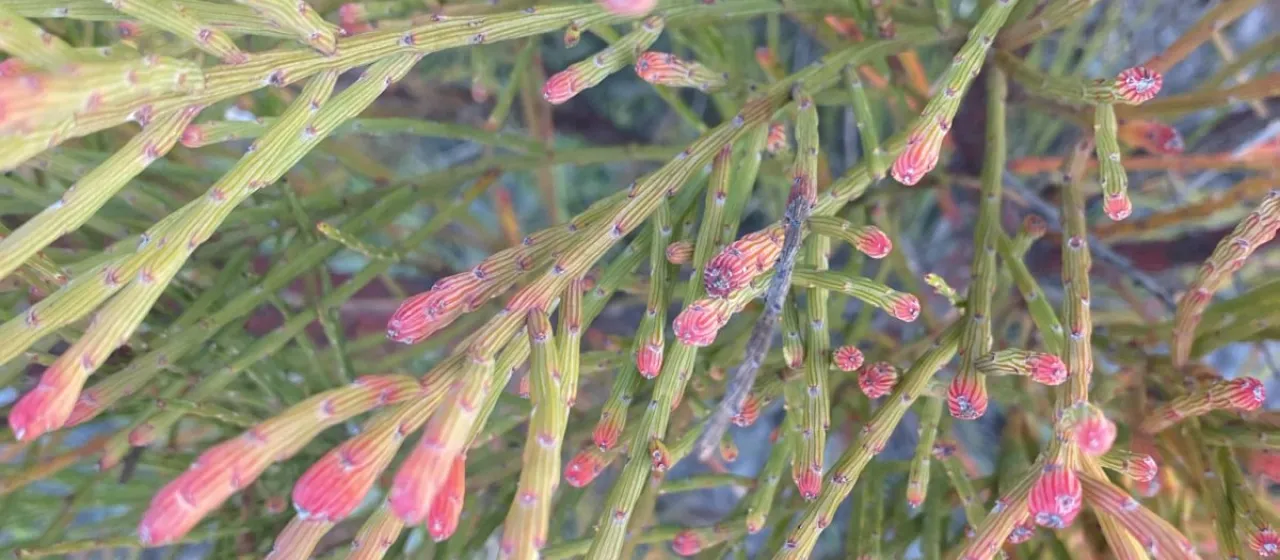
The Coast Ballart (Exocarpos syrticola) is a distinctive perennial shrub belonging to the Santalaceae family. Like other members of its genus, it exhibits a hemi-parasitic lifestyle, establishing haustorial connections with the root systems of neighboring plants to supplement its nutrient uptake, while still maintaining photosynthetic activity in its green, twig-like stems.
Native to the southern coastal regions of Australia, this species is specifically adapted to environments such as dunes, limestone outcrops, and coastal heathlands. It thrives in soils characterized by low fertility and high salinity, where it plays an ecological role in stabilizing shifting sands and providing habitat in harsh maritime climates.
From a botanical standpoint, the plant is characterized by reduced, scale-like leaves that prevent excessive transpiration. The fruit is a small nut attached to a swollen, fleshy pedicel, which is a hallmark of the Exocarpos genus. The plant’s overall structure is typically sparse and intricate, allowing it to withstand high-velocity coastal winds without structural damage.
Cultivation requirements are strict due to the plant's hemi-parasitic nature. Successful growth in a controlled or garden setting requires the presence of suitable host species to support the root system. Soils must be extremely well-draining, similar to sandy dunes, and the use of high-phosphate fertilizers is strongly discouraged as these can be toxic to the plant's sensitive root interactions.
The primary use of Exocarpos syrticola is ornamental, serving as a unique specimen in xeriscaping or native Australian gardens. It is rarely susceptible to common garden pests, though it may be affected by soil-borne pathogens if the drainage is insufficient. Maintaining a stable ecosystem with healthy host plants is the best defense against pests and diseases for this rare and interesting shrub.