
Description
The Silver Lace Vine (Fallopia aubertii), often categorized as a vigorous perennial climber, belongs to the Polygonaceae family. Recognized for its exceptional growth rate, this woody vine is highly valued in horticulture for its ability to rapidly cover walls, fences, and pergolas, effectively transforming architectural structures into lush green vertical landscapes.
Originating from Western China, the Silver Lace Vine has become widely naturalized in temperate regions across the globe. Its capacity to thrive in diverse environmental conditions has cemented its status as a staple for urban landscaping and residential garden design, where it is frequently used to provide quick privacy screens or to disguise unsightly garden features.
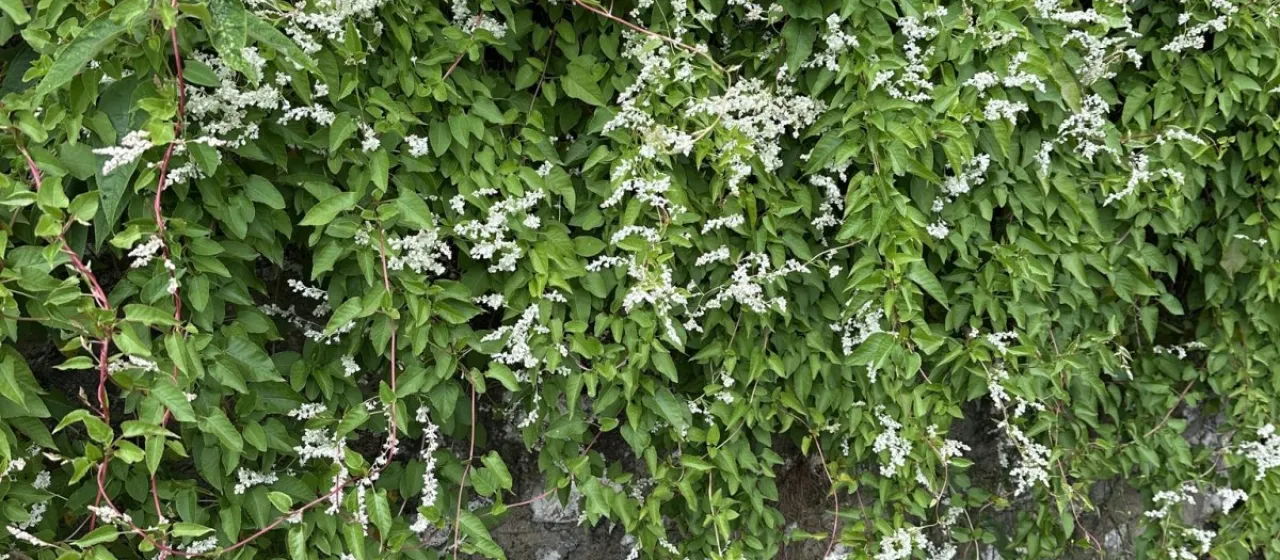
Botanically, the plant is characterized by its alternate, heart-shaped or arrowhead leaves that maintain a vibrant green appearance throughout the summer. During late summer and early autumn, it produces large, frothy panicles of fragrant, small white to greenish-white flowers. These blooms create a spectacular visual display, appearing as a foam-like cascade across the foliage.
In terms of cultivation, the Silver Lace Vine is notably unfussy. It prefers full sun to partial shade and adapts to a wide range of soil types, provided they are reasonably fertile and well-drained. Once established, it demonstrates significant drought tolerance, although it responds well to consistent moisture. Pruning is essential to control its aggressive growth habit, as it can otherwise overwhelm nearby vegetation.
The primary use of Fallopia aubertii is purely ornamental. While it is rarely bothered by serious pests or diseases, gardeners should be aware of potential issues like aphids or powdery mildew, particularly in overcrowded or poorly ventilated spaces. Regular monitoring and proper site selection remain the best methods for ensuring the health and aesthetic contribution of this prolific climber to the garden.