
Description
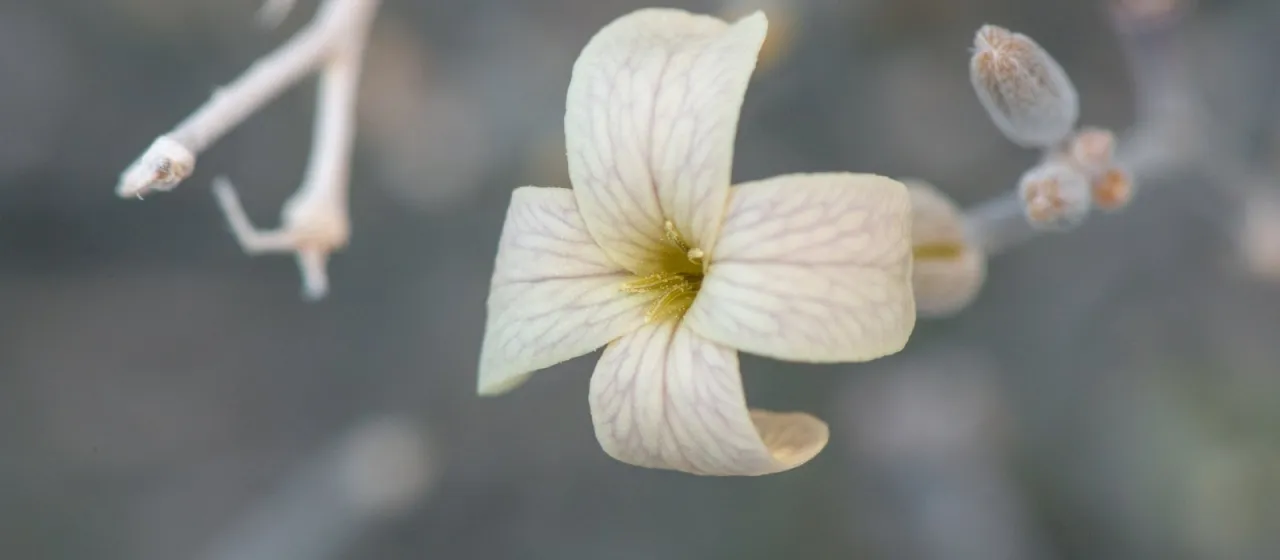
Farsetia longisiliqua is a herbaceous perennial plant belonging to the Brassicaceae family. As an agricultural crop, it is recognized for its extraordinary ability to thrive in arid and semi-arid environments, making it a subject of interest for sustainable agriculture in regions affected by soil degradation and desertification.
The plant originates from the dry zones of the Middle East and North Africa. It has evolved in harsh conditions, successfully colonizing rocky, sandy, and alkaline soils. Due to its natural adaptation, the species is being researched for introduction into areas where water scarcity precludes the growth of conventional oilseed crops like canola or sunflower.
Botanically, it possesses a deep taproot system designed to extract moisture from significant soil depths. The stems and leaves are adapted with pubescence to minimize water loss through transpiration. Its most notable agricultural feature is the production of long siliques (pods) containing energy-rich seeds that provide high-quality vegetable oil.
Agrotechnical requirements for Farsetia are relatively low compared to commercial row crops. The plant thrives in well-drained soils and requires little to no supplemental irrigation once established. Key cultivation parameters include:
- Optimal soil pH ranging from neutral to slightly alkaline.
- High solar radiation exposure.
- Sowing patterns that prevent competition between plants for moisture.
In terms of economic use, the primary focus is on the extraction of oil from the seeds. Furthermore, it acts as a valuable ground cover in desert reclamation projects, aiding in the stabilization of sandy substrates. Current agricultural research aims to stabilize yields and improve the uniformity of harvesting, which is critical for turning this wild-type plant into a robust commercial crop.