
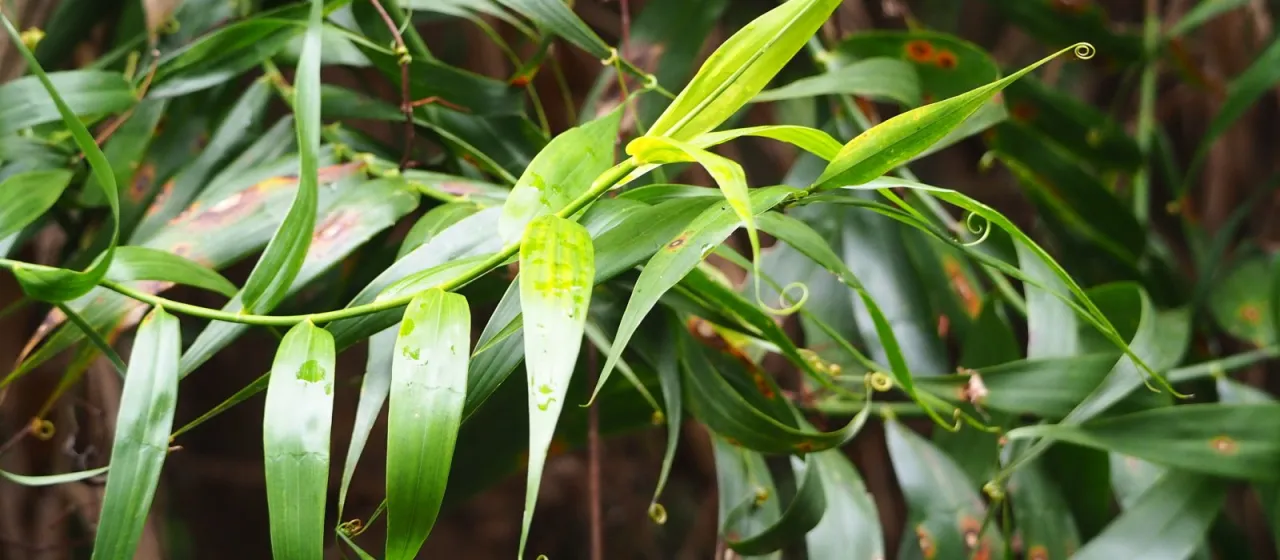
Description
Flagellaria indica is a distinct perennial climbing herb belonging to the Flagellariaceae family. Known for its remarkable ability to scale other vegetation, this plant utilizes leaf tips that have evolved into sensitive, coiling tendrils to secure itself firmly within its natural tropical habitat.
The native range of this species extends across the tropical regions of Africa, Asia, Australia, and various Pacific islands. It is primarily found in coastal areas, mangrove-associated forests, and along riverbanks, where it thrives in conditions of constant high humidity and consistent tropical temperatures.
Botanically, the plant is characterized by its long, lanceolate leaves that transition seamlessly into curling tendrils. The stem itself is remarkably tough and flexible, providing the structural integrity needed to support the plant's rapid vertical growth and its exposure to coastal winds.
Agricultural cultivation of Flagellaria indica demands attention to soil moisture and light availability. Although it is not a large-scale commercial staple, local agricultural practices often involve managed harvesting from the wild. Successful cultivation requires well-drained soils and a climate that mimics its native environment, avoiding any potential frost.
The хозяйственное (economic) utility of the plant is centered on its fibrous stem. It is widely valued for:
- Production of durable handicrafts, baskets, and mats.
- Local traditional medicine for treating various ailments.
- Soil stabilization in delicate coastal ecosystems.
In terms of plant health, the species is relatively resistant to major pathogens but can be susceptible to fungal issues if root aeration is poor. Maintaining consistent growth conditions and ensuring proper spacing helps to minimize the risk of pests and diseases that might otherwise exploit stagnant air and excess soil moisture.