Florida anise
Illicium floridanum Ellis
Description
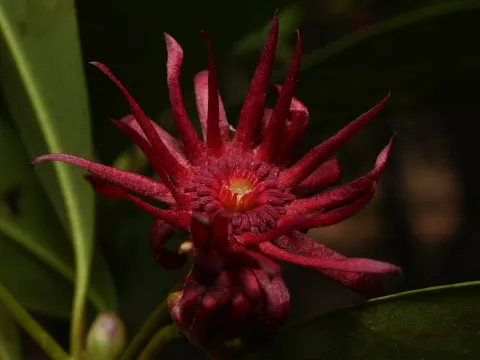
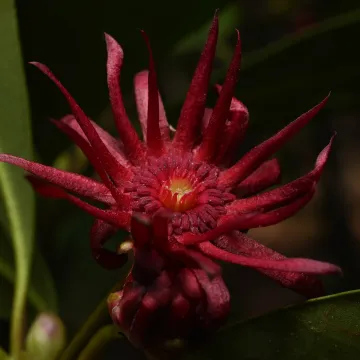
Florida anise (Illicium floridanum) is an evergreen ornamental shrub belonging to the Schisandraceae family. Recognized for its lush, aromatic foliage and striking deep red star-shaped flowers, this plant serves as a prominent specimen in shade-oriented landscaping across subtropical regions.
Originating from the southeastern United States, this species thrives in the damp, shaded environments of woodlands and creek banks. Its natural distribution range is defined by regions where humidity is consistently high and temperature fluctuations remain relatively moderate throughout the year.
Botanically, the plant is characterized by leathery, dark green leaves that release a pleasant, spicy fragrance when crushed. The flowers, appearing in late spring, distinguish themselves through numerous slender petals. The plant typically grows as a multi-stemmed, rounded shrub, reaching a mature height of several meters depending on the local environmental conditions.
Agrotechnical requirements for Florida anise focus primarily on moisture management. It demands consistently moist, well-draining, and acidic soil to thrive. It should be planted in partial to full shade, as intense direct sunlight can scorch the leaves and dehydrate the root system. Mulching is highly recommended to retain soil moisture and regulate ground temperature.
In terms of usage, Florida anise is strictly ornamental, widely utilized for garden borders, privacy screens, and understory planting. Despite its common name, it is important to note that the plant is not a culinary herb and possesses toxicity, meaning it should not be ingested. It is generally hardy against most pests, provided its moisture needs are adequately met.
- High moisture requirements
- Thrives in shade
- Prefers acidic, organic-rich soil
- Requires winter protection in cold climates
Photo gallery