Japanese star anise
Illicium anisatum L.
Description
Japanese star anise (lat. Illicium anisatum L.) is an evergreen shrub or small tree belonging to the Schisandraceae family. It is distinct from the culinary star anise (Illicium verum) due to the presence of highly toxic compounds such as shikimin and anisatin in its fruits. Therefore, it is strictly classified as a non-edible species, valued primarily for its ornamental and ritualistic properties.
Native to the subtropical regions of Japan, Korea, and parts of China, the species thrives in humid climates with mild winters. Its natural habitat is typically found in shaded forest understories, which dictates its requirements for cultivation in garden settings. It prefers sheltered locations where it can be protected from strong winds and intense midday sun.
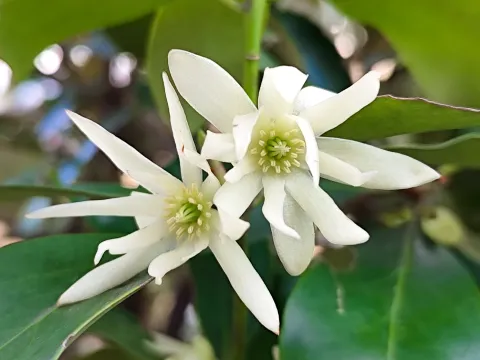
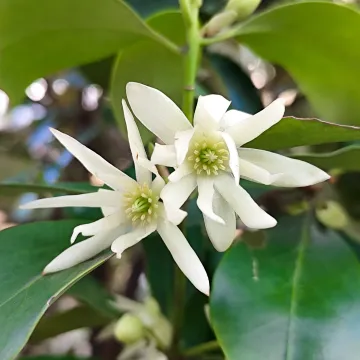
Botanically, the plant features glossy, leathery, elliptic leaves arranged in a spiral pattern. The flowers are small, typically pale yellow or greenish-white, appearing in early spring. The fruit is a woody aggregate follicle arranged in a star-shaped structure, which, despite its visual similarity to culinary anise, should never be consumed.
Cultivation requires acidic, well-draining soils rich in organic matter. Proper site preparation is essential to prevent root rot, to which the plant is sensitive. Regular mulching helps maintain soil moisture levels and protects the superficial root system during warmer months. Propagation is generally achieved through seeds that require stratification or via semi-hardwood cuttings under greenhouse conditions.
The economic and practical utility of Japanese star anise includes:
- The production of incense and aromatic products for Shinto and Buddhist rituals.
- Landscape design, where it is used for its evergreen foliage and elegant growth habit.
- Research into phytochemical extraction for technical applications in the chemical industry.
Plant health management involves monitoring for common pests such as scale insects and spider mites, which can proliferate in poorly ventilated areas. Fungal pathogens related to excessive moisture represent the most frequent disease pressure. Growers should ensure adequate spacing between plants and practice selective pruning to maintain air circulation throughout the crown.
Photo gallery