
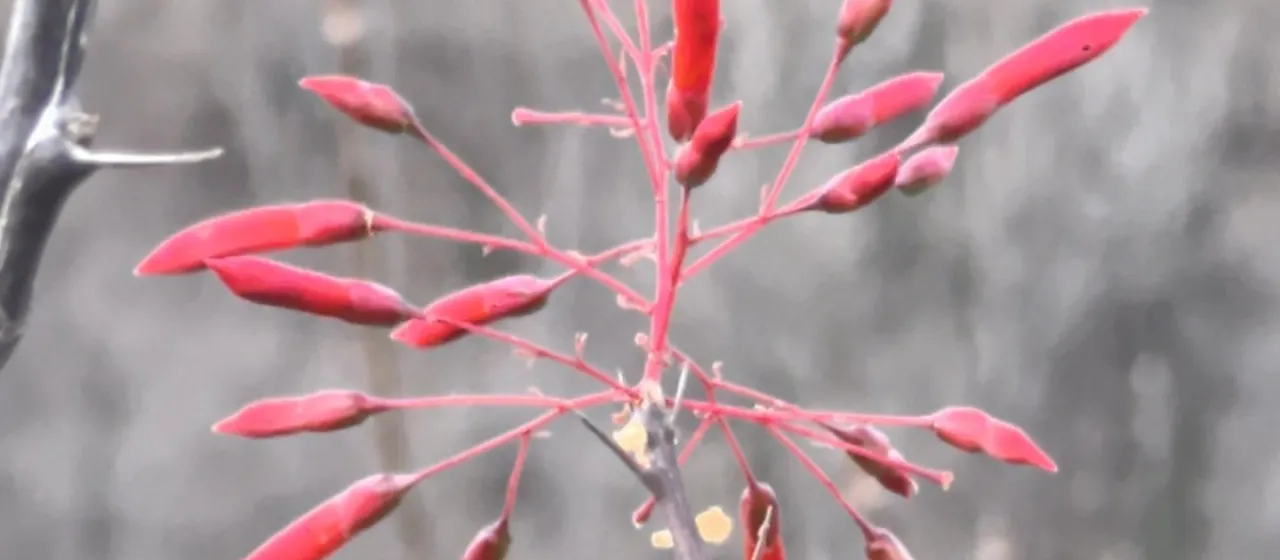
Description
Fouquieria macdougalii is a fascinating perennial succulent species belonging to the Fouquieriaceae family. Known for its distinct arborescent growth habit, it is a classic example of a desert xerophyte that has evolved to thrive in arid environments with very little moisture.
Native to the arid regions of Mexico, particularly in the states of Sonora and Sinaloa, this species is well-adapted to the Sonoran Desert ecosystem. In its natural habitat, it survives in rocky, well-drained soils, often thriving on slopes where water runoff is rapid, preventing soil saturation.
Botanically, the plant is characterized by its woody, spiny stems that can reach several meters in height. It exhibits a deciduous nature; during the wet season, it produces a profusion of small, vibrant leaves, but it sheds them quickly as a survival strategy when drought conditions intensify to preserve internal water resources.
Cultivation of this plant requires meticulous attention to drainage and light. It demands a highly porous soil mix, typically consisting of pumice, coarse sand, and a minimal amount of organic matter. In greenhouse environments, it is essential to mimic the dry/wet cycles of its native habitat to ensure health and prevent fungal root diseases.
The primary horticultural use of Fouquieria macdougalii is in ornamental gardening and xeriscaping. It is highly valued by succulent collectors for its unique structural appearance. While not an agricultural crop in the sense of food production, its management in controlled nursery settings requires precise knowledge of arid-zone plant physiology.
- Requires full exposure to direct, intense sunlight.
- Needs extremely well-draining mineral-rich substrate.
- Susceptible to root rot if soil remains damp for too long.
- Requires a distinct rest period with reduced water in winter.