Freesia laxa
Freesia laxa (Thunb.) Goldblatt & J. C. Manning
Description
Freesia laxa (formerly known as Lapeirousia laxa) is an elegant cormous perennial plant belonging to the Iridaceae family. Unlike common hybrid freesias, this species is prized for its refined appearance and ability to adapt to a wider range of growing conditions, remaining a popular choice for plant collectors and garden enthusiasts.
The plant originates from Southern Africa, where it thrives in forest zones and shaded rocky habitats. In temperate climates, Freesia laxa is frequently utilized as a container plant or a seasonal garden perennial, as it lacks high frost resistance and requires winter protection or the lifting of corms when cultivated in open ground.
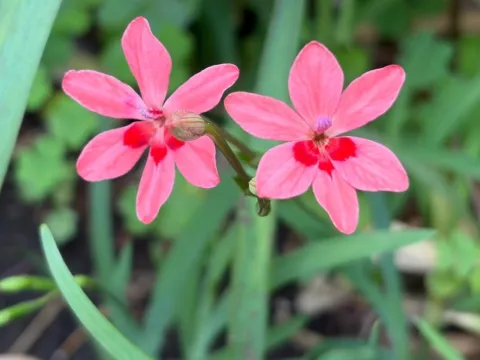
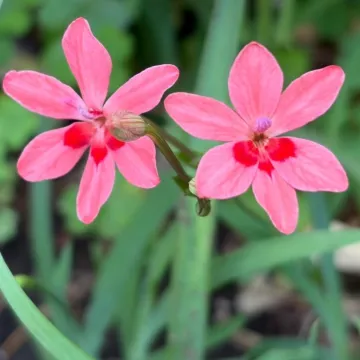
Botanically, it is an herbaceous plant growing between 20 and 35 cm tall with sword-shaped leaves. Its main feature is the loose, raceme-like inflorescences consisting of symmetrical flowers with widely flared petals, usually colored in shades of red, pink, or white, often featuring a contrasting dark blotch in the center that resembles a small eye.
Cultivation requires light, well-draining soil enriched with leaf mold. The plant prefers partial shade or dappled light, as direct midday sun can scorch the foliage. An essential part of care is consistent but moderate watering: the substrate must remain moist, yet free of waterlogging, which is detrimental to the corms and triggers various rot pathogens.
- Corm planting: 5–8 cm deep, 10 cm apart.
- Temperature range: optimal 15–22°C.
- Dormancy: dry storage in a cool place.
- Propagation: offsets (cormlets) or seeds.
The primary diseases affecting the crop include fusarium wilt and various rots, which usually occur if moisture control is neglected. Pests that may attack the plant include thrips, aphids, and spider mites. Proactive management, the use of fungicides, and maintaining garden hygiene help ensure the plant remains ornamental throughout its entire growing season.
Photo gallery