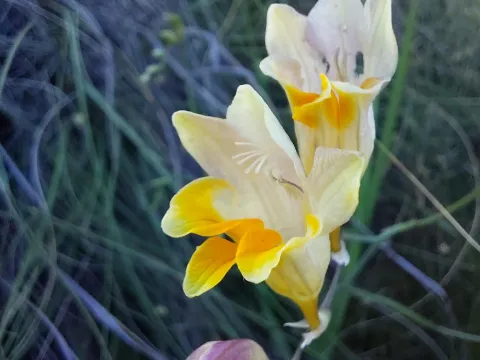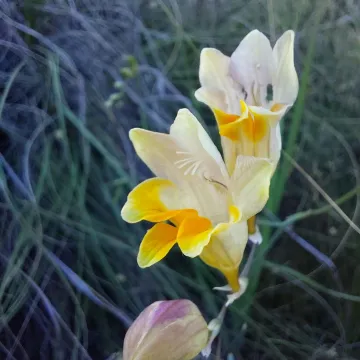
Freesia refracta
Freesia refracta (Jacq.) Klatt
Description
Freesia refracta is a perennial bulbous plant belonging to the Iridaceae family. Native to the Cape region of South Africa, this species is highly valued for its fragrant, bell-shaped flowers that appear in a raceme. In agriculture and horticulture, it is cultivated both as an ornamental cut flower and as a source for essential oils in the perfume industry.
The plant originates from sandy and rocky slopes, reflecting its preference for well-drained environments and specific moisture cycles. In agricultural settings, it requires a Mediterranean-like climate to thrive. It enters a dormancy phase after flowering, which is a critical aspect of its biological cycle that must be managed to ensure healthy growth in subsequent seasons.
Botanically, it is characterized by its narrow, sword-shaped leaves and a thin, slightly curved stem that often arches under the weight of the inflorescence. The bulb structure is sensitive to temperature fluctuations, necessitating controlled storage conditions during the dormancy period to promote flower bud development.
Successful cultivation relies on maintaining light, porous soil with an acidic to neutral pH. A common mistake in growing this crop is excessive irrigation, which promotes rot. Providing adequate airflow and moderate humidity levels is essential for greenhouse production. Farmers should prioritize soil sterilization to prevent root-zone pathogens that specifically target this genus.
The commercial use of Freesia refracta is largely focused on the cut-flower market and the production of fragrant extracts. Growers should remain vigilant against several common threats:
- Fusarium wilt which impacts bulb viability.
- Aphid and spider mite infestations that damage foliage.
- Viral diseases resulting in stunted, deformed growth.
Photo gallery