
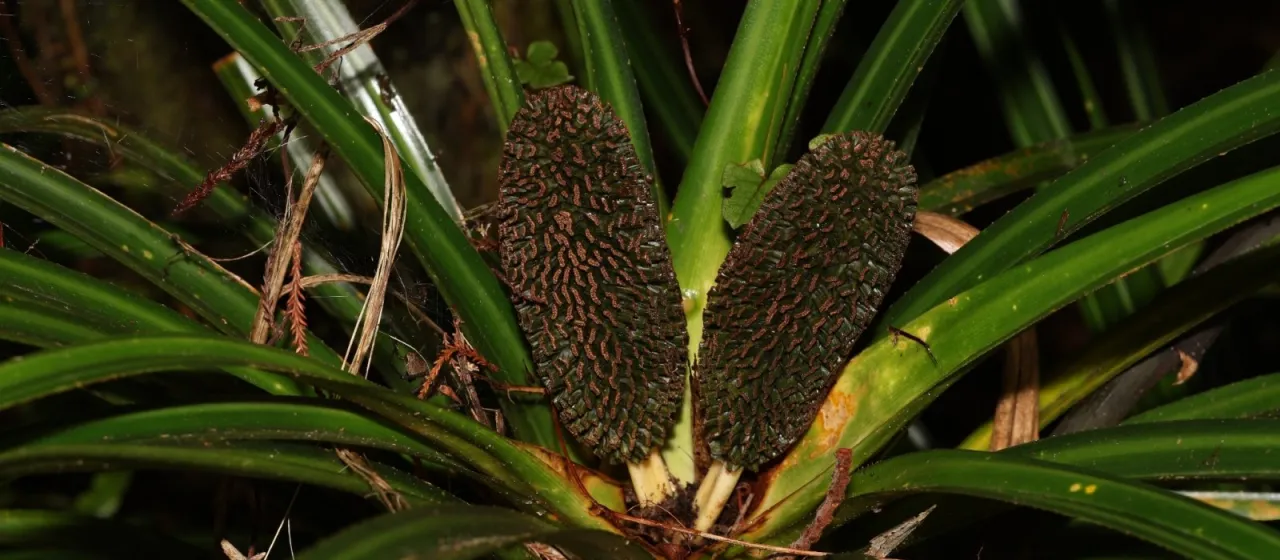
Description
Freycinetia banksii, commonly known by its Māori name Kiekie, is a robust woody climber belonging to the Pandanaceae family. This species is endemic to New Zealand and is well-adapted to the humid, temperate, and sub-tropical forests found throughout the North and South Islands. It typically grows as an epiphyte or a liana, utilizing aerial roots to climb surrounding trees.
The habitat requirements for Freycinetia banksii are specific: it thrives in high-humidity environments with rich, well-draining forest soil. While it is naturally found in the wild forests of New Zealand, it has gained popularity as a botanical subject and a decorative plant in specialized gardens worldwide that can mimic its natural climate.
Botanically, the plant is characterized by long, linear, and leathery leaves that form dense rosettes. Its reproductive structures are particularly distinct, featuring fleshy, colorful bracts that surround the inflorescence. These bracts and the subsequent fruit are highly valued for their sweet taste, making them a traditional food source for local fauna and indigenous peoples.
Cultivation practices for this species prioritize moisture management and temperature control. As a non-hardy plant, it requires protection from severe frosts. When grown in nurseries or conservatories, it is essential to provide diffused light rather than direct, harsh sunlight to prevent leaf scorching. Soil moisture must be consistent, as the plant does not tolerate prolonged drought.
Economically and culturally, Freycinetia banksii is significant for its durable fibers, which have been used for centuries in traditional weaving to create clothing, mats, and baskets. In modern agriculture, it remains a niche crop primarily utilized for its ornamental value. Growers should remain vigilant regarding pests such as aphids or spider mites, especially when maintaining the plants in indoor conditions.
- Requires high atmospheric humidity for healthy growth.
- Propagation is best achieved through division or cuttings.
- Sensitive to nutrient deficiencies in potted substrates.
- Provides significant aesthetic value in tropical garden designs.