
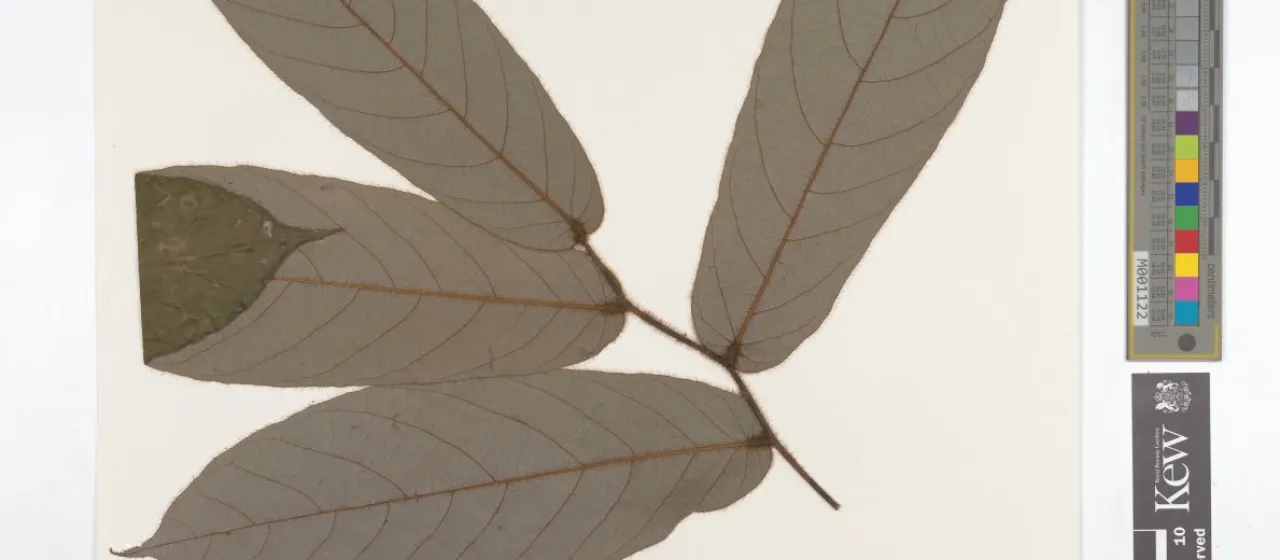
Description
Friesodielsia hirsuta is a perennial woody plant belonging to the family Annonaceae. This species typically manifests as a climbing liana or a small shrub, structurally adapted to the dense understory of tropical forests. It is recognized for its unique vegetative characteristics, most notably the dense pubescence on its leaves and stems, which gives it a distinct tactile profile.
The geographic distribution of this species is centered in the tropical regions of Southeast Asia. It thrives in humid, lowland rainforest environments, often benefiting from the deep shade provided by the forest canopy. The climate in these regions is characterized by minimal temperature variation and consistent rainfall, providing the stable environment necessary for the plant's year-round growth cycle.
Botanically, Friesodielsia hirsuta displays typical Annonaceae features, including spirally arranged leaves and specialized floral structures. The flowers are generally fleshy and designed to facilitate pollination by specific beetles. The resulting fruit structure is complex, often appearing as a cluster of individual carpels, which is a hallmark of many species within this botanical family.
Regarding cultivation, the plant requires conditions that mimic its natural habitat. It prefers well-draining, nutrient-rich soil that is kept consistently moist but not waterlogged. Air humidity is a critical factor for successful growth; therefore, cultivation is generally restricted to tropical greenhouses or conservatories in non-tropical climates. Providing partial shade is essential, as the plant is not adapted to direct, high-intensity sunlight.
Economic and research utility currently centers on the pharmacological potential of its secondary metabolites. Scientists study the plant for alkaloids and other bioactive compounds that may possess medicinal properties. In a controlled cultivation setting, common threats include standard tropical greenhouse pests such as spider mites, mealybugs, and scale insects, while fungal pathogens generally arise only under conditions of poor ventilation or excessive soil moisture.