Radde's fritillary
Fritillaria raddeana Regel
Description
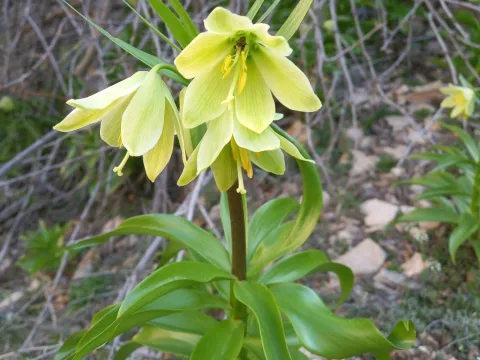
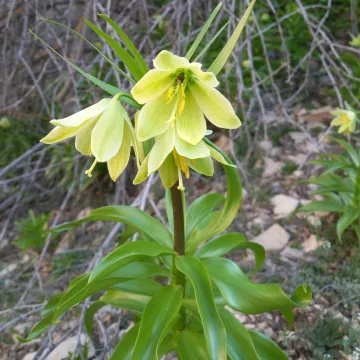
Radde's fritillary (Fritillaria raddeana) is a striking bulbous perennial that belongs to the Liliaceae family. It is highly valued in horticulture for its early flowering and impressive architectural stature, often reaching heights of nearly one meter. The plant features a whorl of broad leaves and a raceme of large, bell-shaped, pale yellow to greenish-yellow flowers that hang elegantly from the stem.
The native range of this species is restricted to the mountainous regions of Central Asia, specifically the Kopet Dag range in Turkmenistan and parts of Iran. These mountainous origins dictate the plant's biological needs, as it is perfectly adapted to spring moisture followed by dry summer conditions. In its native habitat, it grows primarily on rocky slopes, which provides the necessary drainage for its bulb.
Cultivation of Fritillaria raddeana requires careful attention to soil conditions. It thrives in well-drained, fertile, and light soil. It is essential to avoid heavy clay or poorly drained spots, as the bulbs are prone to fungal rot when subjected to standing water. The ideal planting site is a position in full sun or light shade, where the bulbs can receive plenty of light during the spring growing season.
Agrotechnical maintenance involves regular weeding and loosening of the topsoil, taking care not to damage the bulbs. Water should be provided consistently during the active growth and flowering phases but must be reduced significantly after the foliage begins to wither. The bulbs benefit from a deep planting depth, typically 15–20 cm, to ensure stability and proper temperature regulation during the winter months.
- Excellent soil drainage is mandatory.
- Full sun exposure for optimal flowering.
- Bulb division during the summer dormancy period.
- Strategic mulching to protect against late frosts.
Common health issues for this crop include basal rot and various fungal infections if the site is too wet. Pests such as the lily beetle can cause significant foliage damage if not monitored. Growers are advised to perform pre-planting bulb disinfection and to maintain an appropriate distance between plants to encourage better air circulation, which prevents the development of moisture-related diseases.
Photo gallery