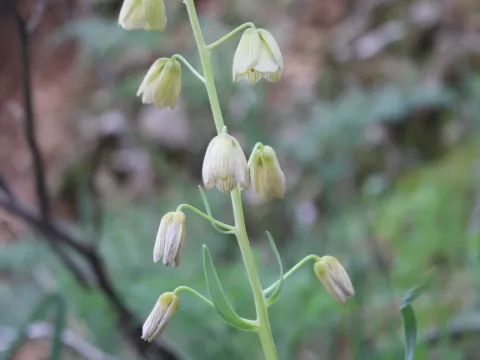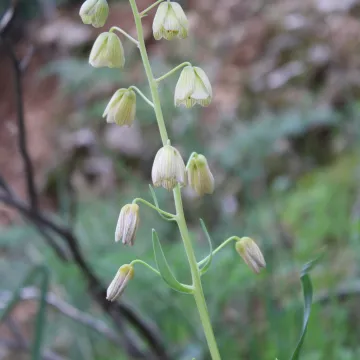
Persian fritillary
Fritillaria persica L.
Description
Persian fritillary (Fritillaria persica L.) is a distinguished bulbous perennial belonging to the Liliaceae family. It is widely recognized for its stately stature, with tall, architectural flower spikes reaching 80 to 100 cm in height, adorned with numerous pendant, bell-shaped flowers in shades of deep violet, plum, or almost obsidian black.
The native habitat of this species encompasses parts of the Middle East, including Iran, Iraq, Turkey, and the Levant. Growing naturally in rocky hillsides and meadows, the plant has evolved to thrive in environments with sharp drainage and specific seasonal shifts, which gardeners must replicate to achieve high-quality ornamental results.
For successful cultivation, the Persian fritillary requires a sunny, sheltered location with excellent soil drainage. It performs best in fertile, light, and well-aerated soils. The bulbs are highly susceptible to rot, making the addition of grit or coarse sand to the planting hole essential to ensure that water moves rapidly away from the bulb base during the dormant and growing phases.
The recommended planting time is in late summer to early autumn, burying the bulbs at a depth of approximately 15–20 cm. During the spring growing season, consistent moisture is necessary, but as summer approaches and the foliage begins to yellow, the soil must be kept relatively dry to allow the bulb to enter a proper dormant stage, which is vital for subsequent blooming.
The primary use for this species is in formal landscape design, high-end border planting, and specimen display in rock gardens. The plant remains relatively robust, though it may face challenges from fungal diseases like Botrytis if drainage is insufficient. Common pests include the red lily beetle and subterranean nematodes, which can be managed through regular monitoring and appropriate horticultural practices.
Photo gallery