
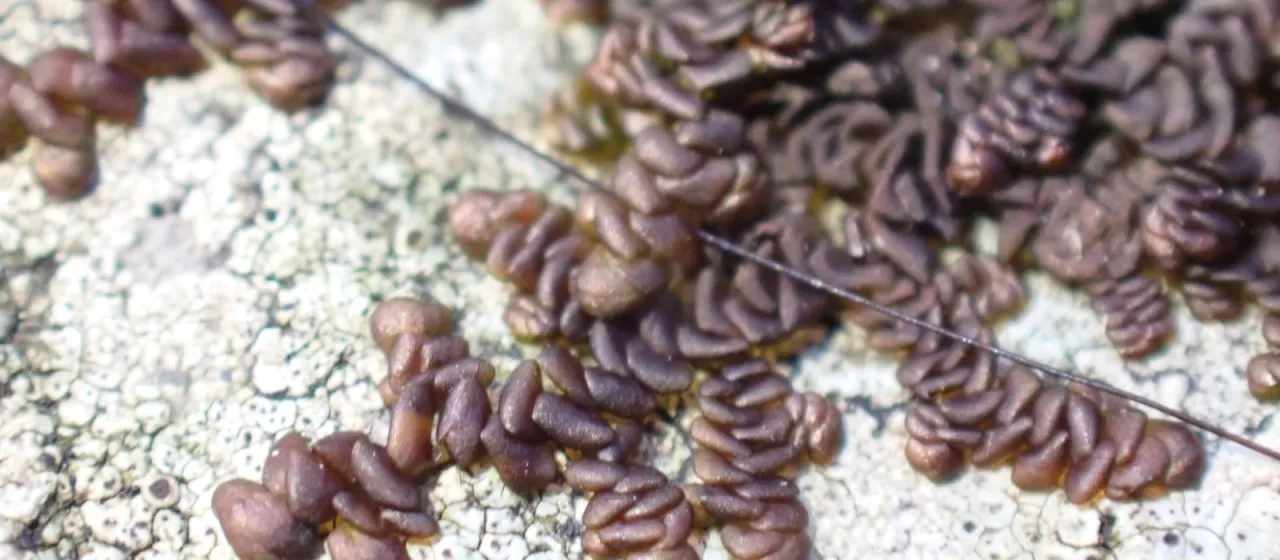
Description
Frullania dilatata is a species of liverwort belonging to the family Frullaniaceae. While not a commercial crop in the traditional agricultural sense, it is a vital component of temperate forest ecosystems, where it thrives as an epiphyte, colonizing the bark of various deciduous trees.
The native range of this species extends throughout Europe, parts of Asia, and North Africa. It is typically found in humid environments where there is consistent moisture availability and protection from direct, intense sunlight. Its distribution is largely dependent on the presence of stable forest stands that provide a suitable microclimate.
Botanically, this plant is characterized by its small, overlapping leaves that create a reddish-brown to dark green carpet on tree bark. A distinct evolutionary adaptation of this genus is the presence of specialized water-sac leaves (utricles), which enable the plant to retain water, allowing it to withstand brief periods of drought while maintaining biological viability.
From an agro-environmental perspective, Frullania dilatata acts as an essential bioindicator. Because of its extreme sensitivity to atmospheric pollutants, particularly sulfur dioxide, its presence or absence provides valuable data regarding the environmental health of agricultural surroundings and adjacent forest areas, making it a critical tool for long-term ecological monitoring.
While the plant is not cultivated for human consumption or industry, it contributes to ecosystem services by stabilizing micro-moisture on bark surfaces and supporting the development of a complex epiphytic community. Preserving its habitat is essential for maintaining the overall resilience of the local biodiversity, which indirectly supports healthy forest-based agriculture.
- Key ecological threat: habitat fragmentation and industrial air pollution.
- Adaptation: specialized lobules for moisture retention.