
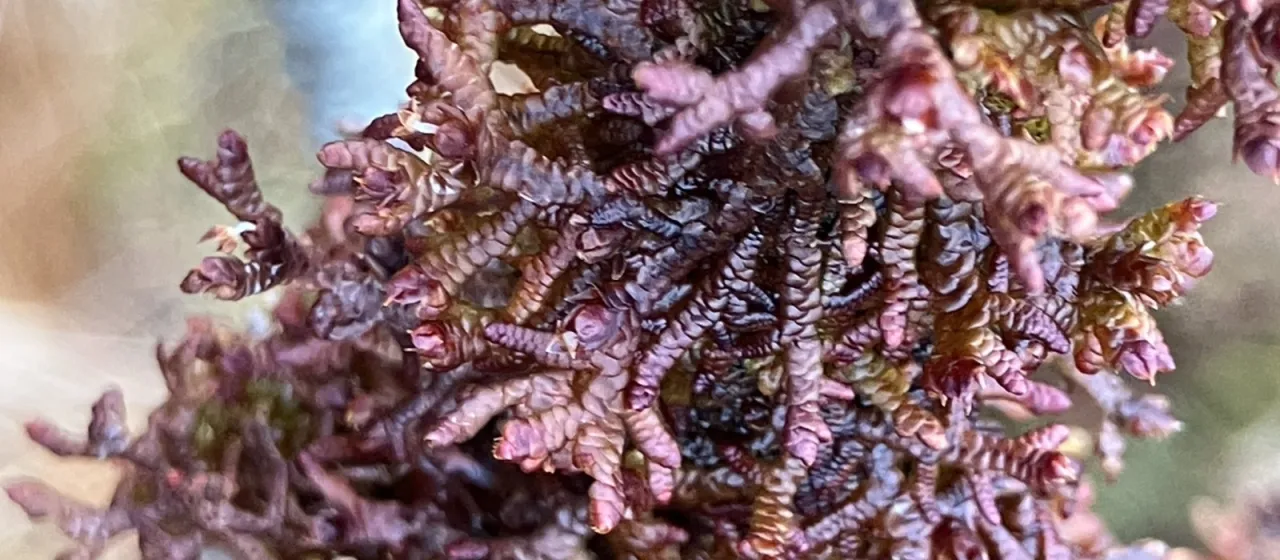
Description
Frullania tamarisci is a species of leafy liverwort belonging to the family Frullaniaceae. While it is not categorized as an agricultural crop, it remains a significant botanical subject due to its complex morphology and its role as a bioindicator within various forest ecosystems across the Northern Hemisphere.
The plant is native to regions with temperate and maritime climates, widely distributed across Europe and parts of Asia. It thrives in high-humidity environments, typically functioning as an epiphyte on tree trunks or inhabiting damp, shaded rock surfaces. Its presence is often indicative of old-growth or stable forest conditions where air quality remains high.
Botanically, Frullania tamarisci is distinguished by its dark green or brownish, mat-like growth habit. The leaves are incubous and deeply divided; the lower lobe is modified into a unique, pitcher-shaped structure called a 'galea'. This specialized morphology acts as a water reservoir, allowing the plant to sustain metabolic activity during periods of fluctuating atmospheric moisture.
Regarding ecological requirements, this species requires specific microclimates with consistent air humidity and filtered light. It cannot be cultivated using standard agricultural techniques, as it lacks the physiological traits of field crops. It does not require fertilizers or soil preparation, as it derives its nutrients directly from atmospheric deposition and debris trapped on its surface.
In terms of practical utility, Frullania tamarisci is primarily utilized in ecological research and environmental monitoring. Because it is highly sensitive to atmospheric pollutants, particularly sulfur dioxide, it serves as a critical biological tool for measuring air purity. As it is not an agricultural commodity, there are no established protocols for pest or disease management related to its growth.