Bastard's fumitory
Fumaria bastardii Boreau
Description
Bastard's fumitory (Fumaria bastardii) is an annual herbaceous plant belonging to the Papaveraceae family. While typically regarded as a weed in agricultural systems, it possesses a unique biological profile that makes it a subject of interest in both botany and potential pharmaceutical research due to its alkaloid content.
The origin of this species is centered around the Mediterranean basin and Western Europe. Over time, it has established itself in various habitats worldwide, particularly in temperate regions. It frequently colonizes disturbed soils, such as agricultural fields, fallow land, and roadside verges, often acting as a pioneer species in favorable environments.
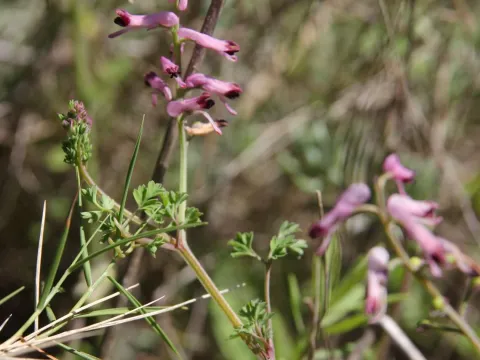
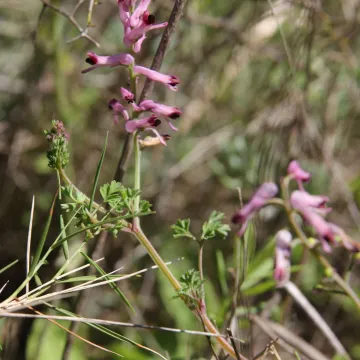
Botanically, the plant is characterized by its sprawling, slender stems and finely divided, glaucous leaves. Its flowers, which appear in late spring and summer, are typically pinkish-white with deep purple tips, arranged in terminal racemes. The plant's ability to produce large quantities of seeds contributes to its survival and dispersal efficiency in agricultural landscapes.
Regarding cultivation and environmental requirements, Bastard's fumitory prefers well-drained, light soils with adequate sun exposure. It is highly sensitive to extreme compaction and lacks competitiveness against vigorous crop canopy development. In farming, agronomic management focuses on crop rotation, mechanical weeding, and the application of selective herbicides to suppress its population density.
- Economic utility: restricted to pharmaceutical research and traditional herbal medicine practices.
- Pests and pathogens: susceptible to powdery mildew and various leaf-spotting fungi.
- Agronomic status: listed as a common weed that necessitates proactive management in vegetable production.
The primary utility of this plant lies in its chemical composition, specifically the presence of isoquinoline alkaloids. While it is rarely grown as a controlled crop, its presence on agricultural land is carefully monitored by agronomists to prevent excessive seeding. Proper soil management and timely intervention are essential to mitigate its impact on commercial yields in susceptible fields.
Photo gallery