Common fumitory
Fumaria officinalis L.
Description
Common fumitory (lat. Fumaria officinalis L.) is an annual herbaceous plant belonging to the Papaveraceae family. While primarily categorized as a weed in agricultural landscapes, it is also valued as a medicinal plant with a long history of use in traditional and modern herbal medicine for its alkaloid-rich composition.
The plant originates from the Mediterranean region but has successfully naturalized across Europe, North Africa, and parts of Asia and North America. It is commonly found in disturbed soils, including farmland, gardens, and along field margins, where it thrives in nitrogen-rich and moderately moist environmental conditions.
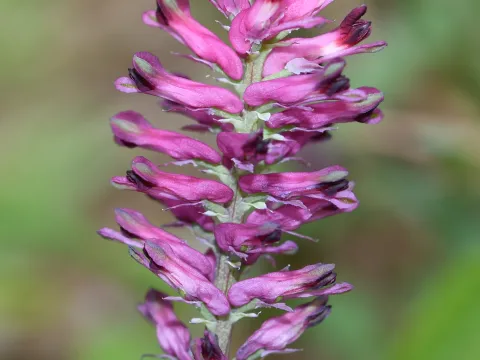
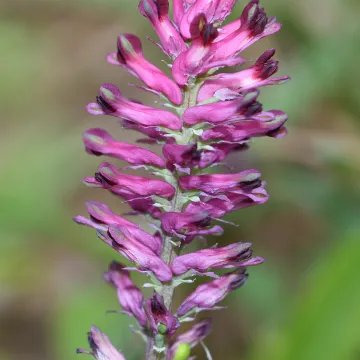
Botanically, it is characterized by a sprawling, branched stem and finely divided, delicate leaves. Its small, tubular, pinkish-purple flowers are arranged in terminal racemes. The plant exhibits high reproductive capacity, producing numerous small seeds that can remain viable in the soil seed bank for extended periods, making it a persistent agricultural challenge.
Agricultural management requires integrated weed control strategies. To minimize its impact on crop yields, farmers employ regular soil cultivation, precise crop rotation, and timely intervention with appropriate herbicides in infested cereal or row crops. Proper management of field edges is also essential to prevent the spread of seeds into the main production area.
In terms of economic usage, the plant is harvested for the pharmaceutical industry, specifically for its choleretic and antispasmodic properties. From a plant protection perspective, common fumitory is susceptible to various pathogens such as powdery mildew and may serve as an alternate host for insect pests like aphids, which necessitates monitoring if the plant is grown as an intentional crop.
Photo gallery