
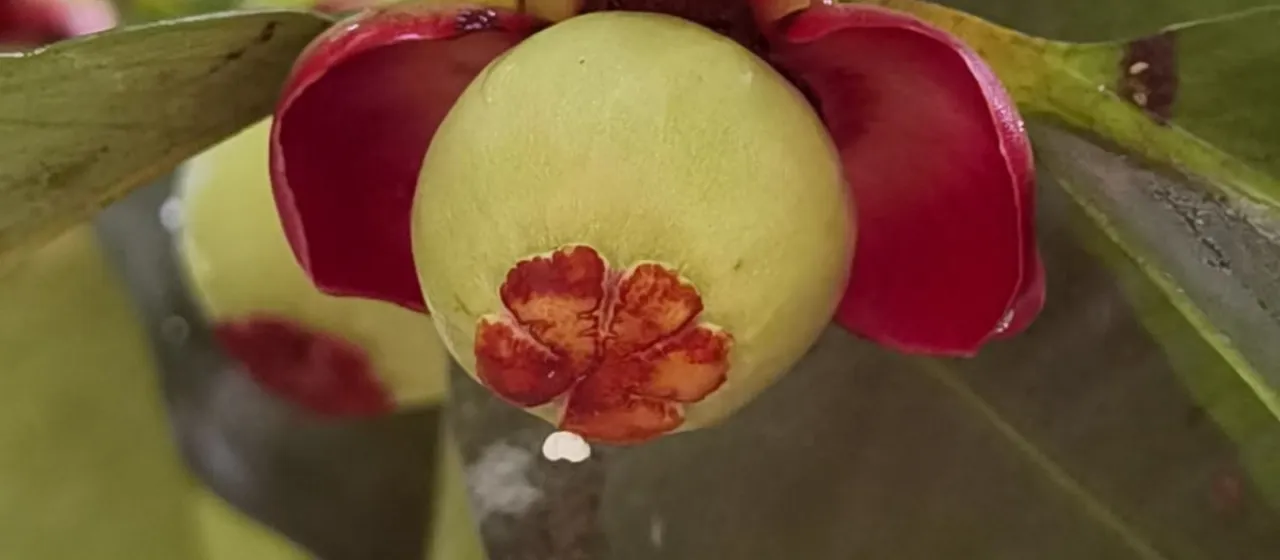
Description
Mangosteen (Garcinia mangostana L.) is a tropical evergreen tree in the Clusiaceae family, widely regarded as one of the finest fruits in the world. Often called the queen of tropical fruits, it is prized for its delicious, snow-white, juicy segments enclosed in a thick, deep purple rind. It is a slow-growing tree that requires specific environmental conditions to thrive.
Native to the Southeast Asian tropics, mangosteen is predominantly cultivated in regions like Thailand, Indonesia, and Malaysia. It is strictly a tropical crop, as it cannot tolerate frost or even cool temperatures. Successful commercial cultivation requires a consistent, warm climate with high humidity and well-distributed rainfall throughout the year.
Botanically, the tree features a dense, symmetrical crown with leathery, dark green leaves. The tree possesses a unique growth pattern, often starting with a deep taproot that makes it sensitive to transplanting. The fruits mature slowly, typically taking three to four months to develop from flowering to harvest, depending on local microclimatic conditions.
In terms of agricultural management, mangosteen trees prefer deep, fertile, moisture-retentive soils that are slightly acidic. Proper irrigation is crucial, as the tree is intolerant to long periods of drought, yet it also suffers if the soil becomes waterlogged. Providing adequate shade for saplings is a standard practice to prevent sunburn and ensure strong establishment.
- Maintaining high atmospheric humidity levels.
- Regular application of organic mulch to keep root zones cool.
- Controlled fertilization to support vegetative growth.
- Monitoring for scale insects and thrips on foliage.
The primary agricultural use of mangosteen is for the fresh fruit market. Beyond consumption, the peel is highly valued in the medicinal and cosmetics industries due to its high concentration of xanthones, which exhibit strong antioxidant properties. Disease management is vital, with focus on preventing root rot and controlling common pests like mealybugs and leaf-eating beetles.