
Description
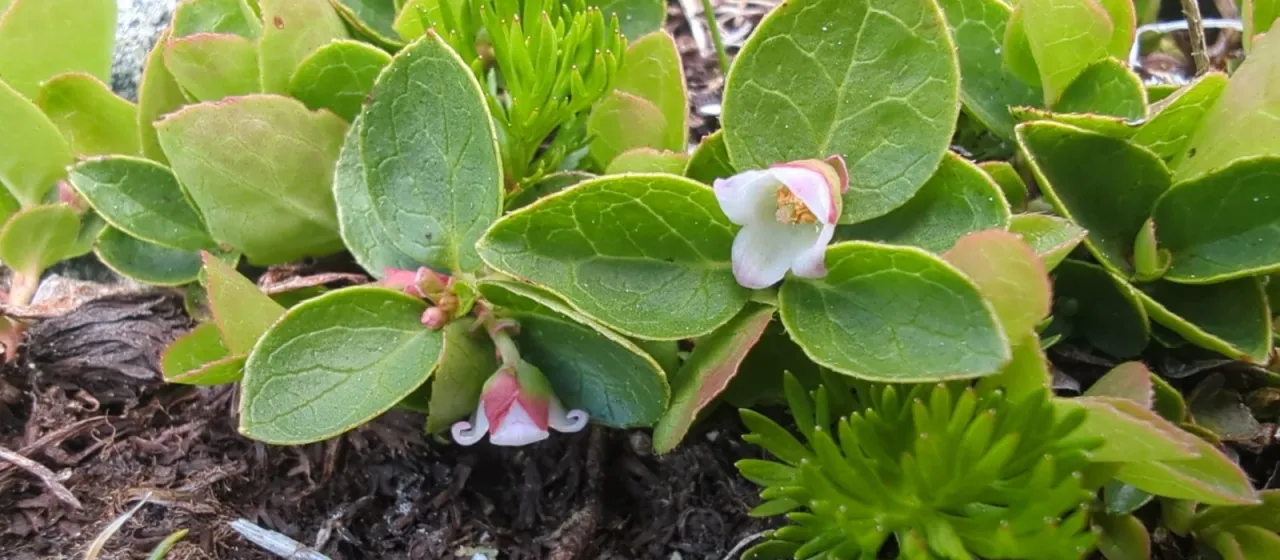
Gaultheria humifusa, commonly known as alpine spicy wintergreen, is a low-growing, evergreen subshrub belonging to the Ericaceae family. It is highly valued in specialty horticulture for its creeping habit and its ability to thrive in cool, acidic environments, making it a distinct choice for rock gardens and woodland landscapes.
The plant originates from the mountainous regions of Western North America, ranging from British Columbia down to the mountains of California. It typically inhabits moist meadows, rocky slopes, and the understory of coniferous forests, reflecting its biological need for high-altitude-like conditions in a garden setting.
Botanically, this species is characterized by prostrate stems that often root at the nodes, creating a mat-like coverage. The foliage consists of small, leathery, dark green leaves that persist throughout the winter. It produces solitary, urn-shaped flowers that develop into small, brilliant red, edible berries with a characteristic aromatic, spicy flavor.
Successful cultivation requires specific environmental parameters: a well-drained, acidic soil rich in organic matter is essential. The plant performs best in partial shade, as it is susceptible to scorching under intense direct sunlight. Consistent moisture is required, and the application of an acidic mulch, such as pine needles or peat, is highly recommended to protect the shallow root system.
Regarding pest and disease management, the primary risks involve fungal infections such as root rot or leaf spot, which are usually triggered by poor drainage or excessive humidity. Regular thinning of plants to improve airflow and keeping the foliage dry are effective preventative measures for maintaining a healthy stand of Gaultheria humifusa.
- Acidic soil preference
- Partial shade requirement
- Cold hardy species
- Edible aromatic berries
- Low maintenance ground cover