
Description
Gaultheria nummularioides, known as the creeping wintergreen, is a low-growing, evergreen subshrub belonging to the Ericaceae family. It is distinguished by its trailing, wiry stems and small, glossy, rounded leaves that are arranged in two rows, creating a distinctively neat, coin-like appearance.
The plant originates from the high-altitude forests and mountainous regions of the Himalayas, China, and Southeast Asia. It thrives in cool, moist climates, typically occupying the forest floor or rocky crevices where the atmosphere remains humid and the soil is consistently acidic.
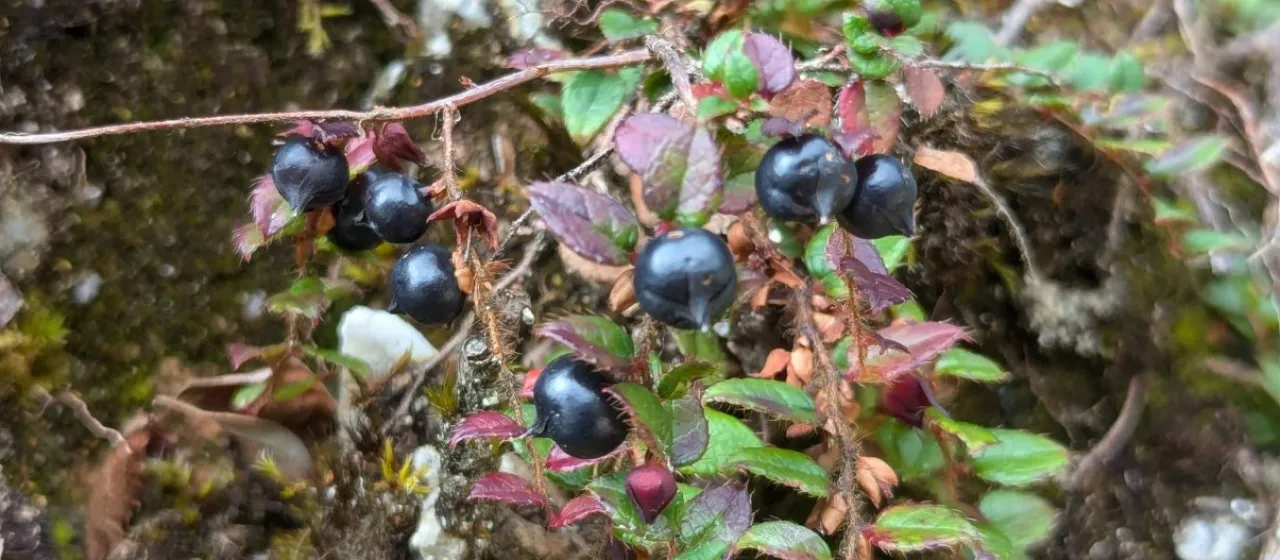
Botanically, this shrub is prized for its aesthetic structure, rarely exceeding a few centimeters in height but spreading wide across the substrate. It produces small, solitary, white to pinkish, bell-shaped flowers, followed by dark, indigo-black berries that add significant ornamental value to the plant throughout the autumn.
Cultivation requires specific conditions: a well-drained, acidic soil rich in organic peat or leaf mold. Consistent moisture is crucial for the health of the plant, as it is highly sensitive to desiccation. In an agricultural or garden setting, it should be placed in a spot with partial shade to mimic its natural woodland habitat.
- Soil pH: Acidic (4.5–6.0).
- Watering: High moisture requirements, avoid drying out.
- Growth Habit: Mat-forming, slow to moderate spreader.
- Climatic Zone: Best suited for temperate, humid climates.
In landscaping, Gaultheria nummularioides is primarily used as an ornamental groundcover for rock gardens, shaded borders, or woodland-style gardening. Due to its compact size, it is also a popular candidate for trough gardens and container cultivation, provided that its specific humidity needs are met.
The plant is susceptible to fungal issues, such as root rot and leaf spot, typically caused by stagnant water or poor air circulation. Common pests include spider mites, which can be problematic in dry indoor environments, and scale insects, requiring careful monitoring and integrated pest management practices.