
Description
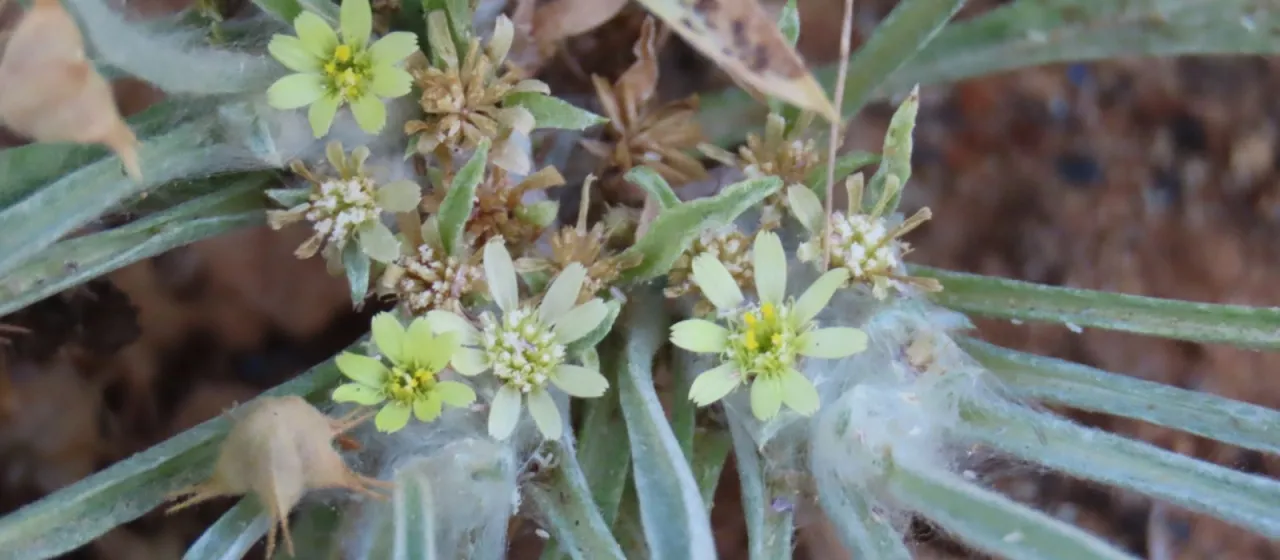
Geigeria acaulis is a perennial herbaceous plant classified within the Asteraceae family. Often referred to as a stemless plant, it exhibits a characteristic rosette growth habit, keeping its leaves close to the ground to survive in harsh environmental conditions.
The plant is native to the arid and semi-arid regions of Southern Africa. Its distribution is closely linked to specific grassland types where it thrives in sandy or rocky soils that are often unsuitable for conventional agricultural crops. It acts as a specialized member of the local flora adapted to high-temperature fluctuations.
Botanically, Geigeria acaulis is distinguished by its compact size and deep-reaching root system, which allows it to access deeper soil moisture. The flowers are typically yellow and bloom in heads, positioned low to the soil surface to minimize exposure to wind and desiccation.
In agronomy, this plant is not considered a crop but a notorious toxic weed. It contains sesquiterpene lactones that cause severe metabolic and neurological issues in grazing livestock, a condition historically documented in the region as a significant hurdle for sustainable sheep farming.
Management strategies for this species are focused on minimizing the risk to livestock and preventing its spread across grazing lands through:
- Implementing rotational grazing to prevent overgrazing of palatable species.
- Active manual removal during the pre-flowering stage.
- Application of targeted herbicides where mechanical control is impractical.
- Monitoring soil health and overseeding with competitive indigenous grasses.