
Description
Geigeria burkei, commonly known as a member of the Asteraceae family, is a herbaceous perennial plant native to the arid and semi-arid regions of Southern Africa. In an agricultural context, it is not cultivated but rather managed as a significant toxic weed that poses a major challenge to rangeland management and animal health.
This species is well-adapted to harsh environmental conditions, thriving in poor, sandy, or rocky soils where moisture is limited. Its natural range encompasses areas in South Africa, Namibia, and Botswana, where it often colonizes overgrazed lands, effectively outcompeting native forage species due to its high resilience and adaptability.
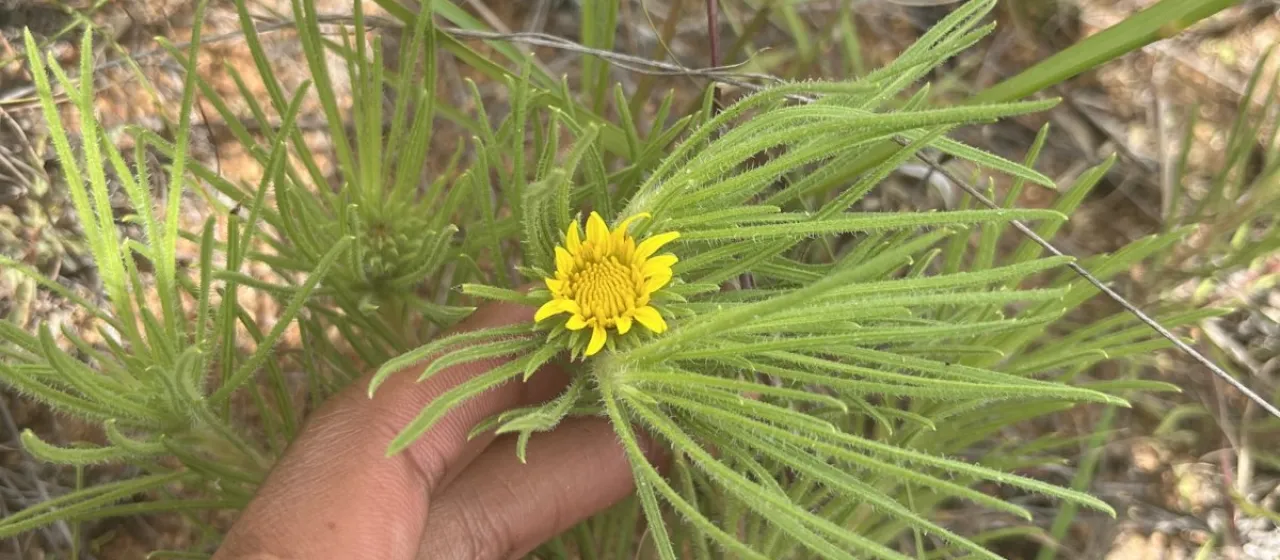
Botanically, Geigeria burkei is characterized by a low-growing rosette of leaves and a robust taproot system. During its growth cycle, it produces small yellow flower heads that distribute wind-borne seeds, allowing it to propagate rapidly across degraded landscapes. It is recognized by its ability to remain green when other plants dry up during seasonal droughts.
The primary economic impact of this plant is its high toxicity to livestock, specifically sheep and cattle. Ingestion leads to a condition commonly referred to as "vermiculite disease" or giergirosis, which manifests as neurological damage and metabolic failure. Due to these toxic properties, fields infested with Geigeria burkei are often rendered unusable, leading to substantial financial losses for livestock farmers.
Effective management strategies require a multi-faceted approach to reduce its prevalence. Farmers are advised to practice rotational grazing to prevent overgrazing, which is the primary catalyst for the spread of this species. In severe cases, chemical control using targeted herbicides or mechanical removal is necessary to restore the productivity of the pasture and ensure the safety of the herd.