
Description
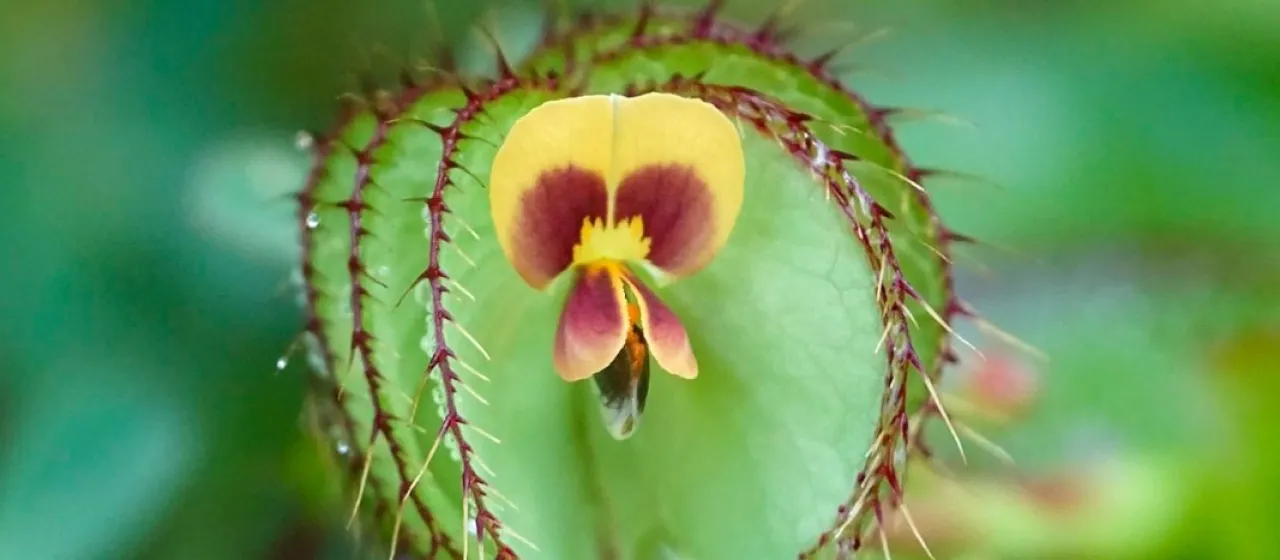
Geissaspis cristata is an annual herbaceous plant belonging to the Fabaceae family. This species is native to tropical environments and is characterized by its distinct, comb-like bracts that protect its flowers. Within the agricultural community, it is recognized for its role in biodiversity and its potential utility in tropical land management systems.
Originating from parts of Asia and Africa, this plant is strictly adapted to tropical climates. Its distribution range is determined by high year-round temperatures and specific rainfall patterns. It thrives in open, sunny locations within savannah or woodland habitats, where it plays a role in the local ecology by enriching the soil through nitrogen fixation processes typical of legumes.
Botanically, the plant presents a complex leaf structure and a specialized inflorescence. The distinctive crest-like appearance of its bracts is the primary identifier for the species. Its root system is moderately deep, allowing it to adapt to varying moisture conditions during the growing season, provided the soil drainage is sufficient to prevent root rot.
Cultivation requirements for Geissaspis cristata focus on providing well-drained, fertile soil with a slightly acidic to neutral pH. It requires high light intensity for optimal growth and flowering. Agricultural practices should prioritize early weed management, as the seedlings can be sensitive to competition during the establishment phase, and moisture control to ensure consistent development.
In terms of agricultural use, the plant is valued for its nitrogen-fixing capabilities, which benefit soil health when used as a cover crop or green manure. It can also serve as a source of biomass in forage research for livestock in tropical regions. Common agricultural challenges include fungal infections in humid conditions and sensitivity to soil compaction, which can impede root expansion.
- Excellent nitrogen-fixing properties.
- High demand for direct sunlight.
- Sensitivity to cold and frost.
- Valuable as a soil-improving cover crop.