Ghostplant
Graptopetalum paraguayense (N. E. Br.) E. Walther
Description
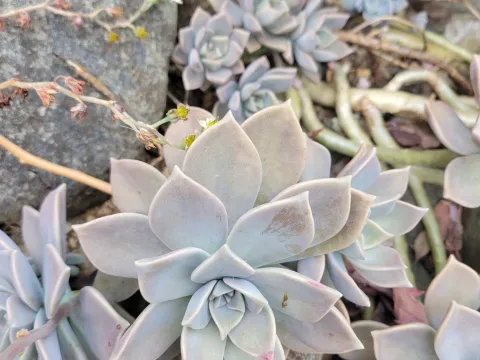
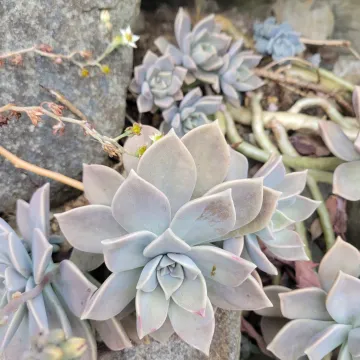
Ghostplant (Graptopetalum paraguayense) is a perennial succulent species within the Crassulaceae family. Native to the rocky slopes of Mexico, this plant is widely recognized for its rosettes of fleshy, pale, greyish-pink leaves covered in a dusty, waxy epicuticular wax. This unique feature gives the plant its ghostly appearance, making it a popular choice for succulent collections worldwide.
The botanical structure of the Ghostplant is defined by its trailing stems that become elongated over time, making it an excellent candidate for hanging baskets or container arrangements. The foliage is thick and adapted to store water, providing drought resistance. During the blooming season, the plant produces delicate, star-shaped white flowers with small reddish speckles, usually rising on slender stalks from the center of the rosettes.
Cultivation requires specific environmental conditions to maintain plant health. A gritty, well-draining soil mix specifically designed for cacti and succulents is essential to prevent root rot. The plant demands bright light; in indoor settings, a south-facing window is usually preferred. Excessive watering, particularly during the dormant winter months, is the most common cause of failure in its horticultural management.
In terms of agricultural and horticultural use, the Ghostplant is highly valued for its ornamental versatility. It is frequently used in rock gardens, drought-tolerant landscapes, and as a houseplant in cooler climates. Its extreme ease of propagation, where individual leaves can readily sprout new plantlets, makes it highly efficient for mass cultivation and retail nursery production.
Common health issues include infestation by mealybugs, which often colonize the crevices between leaves, and fungus gnats in overly moist soil. To maintain a thriving plant, it is vital to avoid overhead watering, which can wash away the protective waxy coating. Regular inspection and moderate ventilation are sufficient to prevent the development of typical fungal infections.
- Light: Full sun to partial shade.
- Watering: Deep but infrequent, allowing the soil to dry out completely.
- Soil: Highly permeable cactus mix.
- Propagation: Leaf cuttings or stem offsets.
Photo gallery