Graptopetalum filiferum
Graptopetalum filiferum (S. Watson) J. Whitehead
Description
Graptopetalum filiferum is a fascinating succulent species belonging to the Crassulaceae family. It is highly regarded by botanists and collectors for its unique architectural form, characterized by a rosette of fleshy leaves adorned with distinct, hair-like filiferous tips.
Native to the arid, high-altitude regions of Mexico, this plant has evolved to survive in nutrient-poor, rocky substrates. Its natural habitat is defined by intense sunlight and erratic rainfall, which has led to the development of highly efficient water-storage tissues and a metabolic system capable of enduring prolonged droughts.
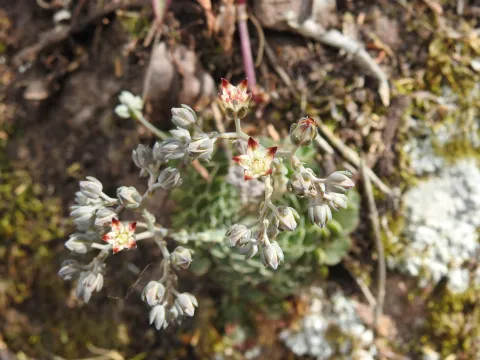
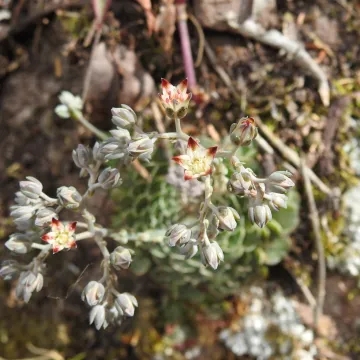
Botanically, the plant forms tight, symmetrical rosettes. Each leaf is covered with a waxy bloom that minimizes transpiration. During the spring, the plant produces delicate inflorescences that rise above the rosette, showcasing star-shaped flowers that are typically marked with reddish or brown patterns, characteristic of the Graptopetalum genus.
Cultivation requires strict attention to soil composition. A mineral-heavy, well-draining substrate is mandatory to prevent root rot, which is the most common cause of failure in domestic conditions. The plant requires a bright, sunny location to maintain its tight shape and prevent etiolation. During the dormant winter season, it should be kept cool and dry to ensure a robust bloom in the following cycle.
Common pests include mealybugs, which tend to hide between the tightly packed leaves, and occasionally aphids during the flowering season. Disease control relies primarily on preventing water accumulation in the rosette center. Propagating the plant is straightforward through leaf cuttings or offsetting rosettes, making it a popular choice for succulent enthusiasts worldwide.
Photo gallery