
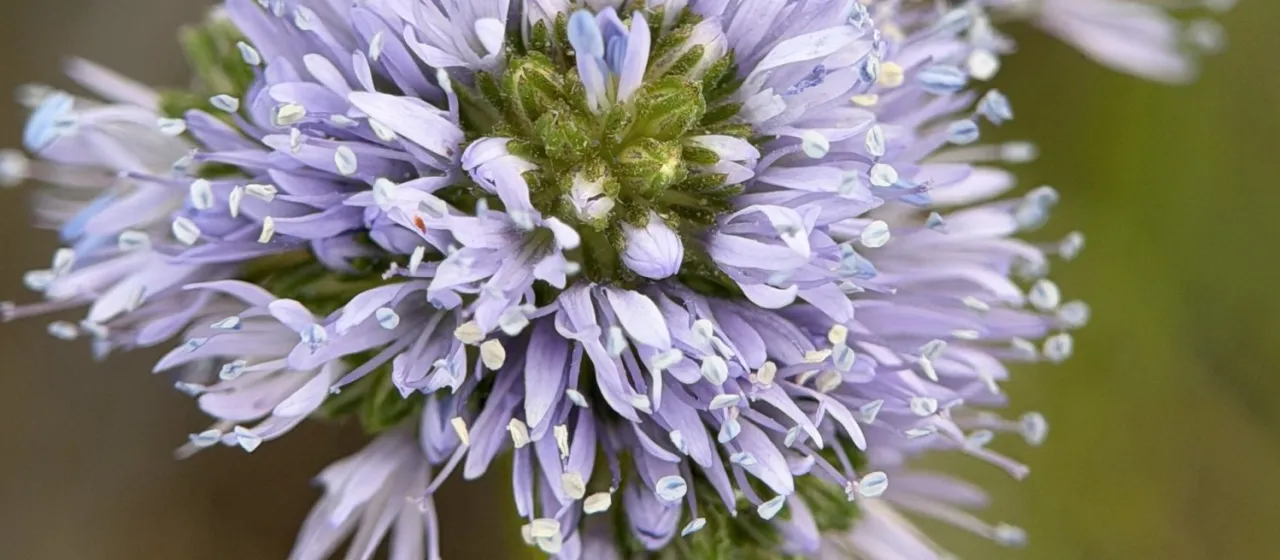
Description
The Blue Thimble Flower (Gilia capitata) is an attractive annual plant belonging to the Polemoniaceae family. Known for its distinct, globe-shaped flower clusters ranging from soft lavender to deep blue, this plant is a staple for gardeners interested in creating naturalistic, meadow-like landscapes.
This species is native to western North America, particularly in regions across California and the Pacific Northwest. Historically, it thrives in open, sunny habitats such as grassy slopes and coastal bluffs. Its natural evolutionary adaptation to these environments allows it to tolerate drier soil conditions compared to more common garden bedding plants.
Botanically, the plant develops an upright, branching structure with delicate, pinnately divided leaves that give the plant a fern-like appearance. The flowers are clustered into dense, spherical heads, blooming throughout the summer months. Because of its high nectar content, it is highly valued by ecologists and gardeners for attracting pollinators, including native bees and butterflies.
In terms of agricultural and horticultural practice, Gilia capitata requires full sun exposure and soil with excellent drainage. It is not suitable for damp, stagnant areas, as waterlogged roots often lead to plant failure. Direct sowing is recommended as the plant develops a taproot that is sensitive to disturbance, making transplanting difficult once the seedlings have established.
When it comes to maintenance, the plant is relatively low-input. However, gardeners should be vigilant regarding fungal pathogens that may appear in overly humid conditions or poor soil drainage. Common pests such as aphids or spider mites can occasionally infest the foliage, but these are typically manageable with standard horticultural soaps or by promoting beneficial predatory insect populations.