
Description
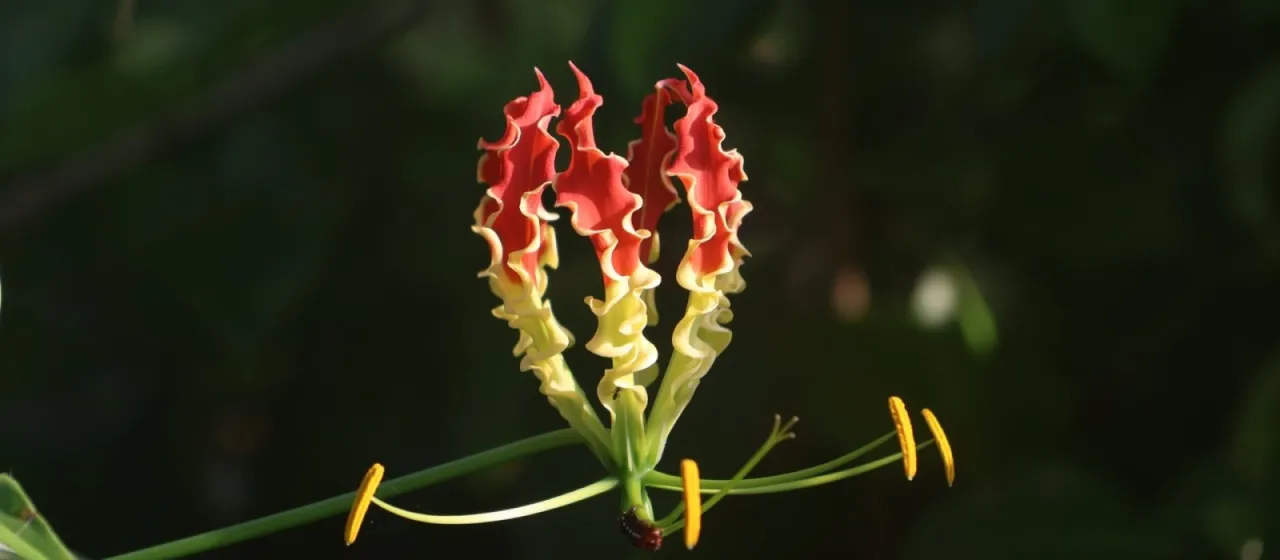
Gloriosa rothschildiana, commonly known as the flame lily or glory lily, is a perennial tuberous vine belonging to the Colchicaceae family. It is renowned for its striking, reflexed, fiery-red and yellow petals that create a distinct "flame" appearance, making it a highly sought-after plant in ornamental horticulture.
The species originates from the tropical regions of Africa, specifically found in countries like Uganda and other parts of the continent's tropical belt. Due to its tropical origins, the plant requires a frost-free environment to thrive, making it an excellent candidate for greenhouse cultivation or seasonal outdoor gardening in temperate climates with warm summers.
Botanically, the plant is characterized by its vining growth habit. Using leaf-tip tendrils, it can climb up to 3 meters in height given sufficient support. The plant develops a fragile, fleshy tuber which acts as a storage organ during its dormant stage. Growers must handle these tubers with extreme care, as the growing tip is delicate and its destruction will prevent the plant from sprouting.
Cultivation success depends on precise environmental control. The soil must be well-drained, porous, and nutrient-rich, as saturated soils quickly lead to tuber rot. A temperature range between 20°C and 25°C is ideal for active growth. During the growing season, consistent moisture and high humidity are necessary, followed by a total withdrawal of water once the foliage begins to yellow and die back for the winter dormancy period.
The commercial use of Gloriosa rothschildiana is primarily decorative, favored for cut flowers and greenhouse displays. It is essential to note that the plant is toxic to humans and pets due to the presence of colchicine. Common agricultural challenges include managing spider mites and mealybugs, which thrive in protected environments, as well as maintaining optimal soil health to prevent fungal pathogens from affecting the tuber system.