
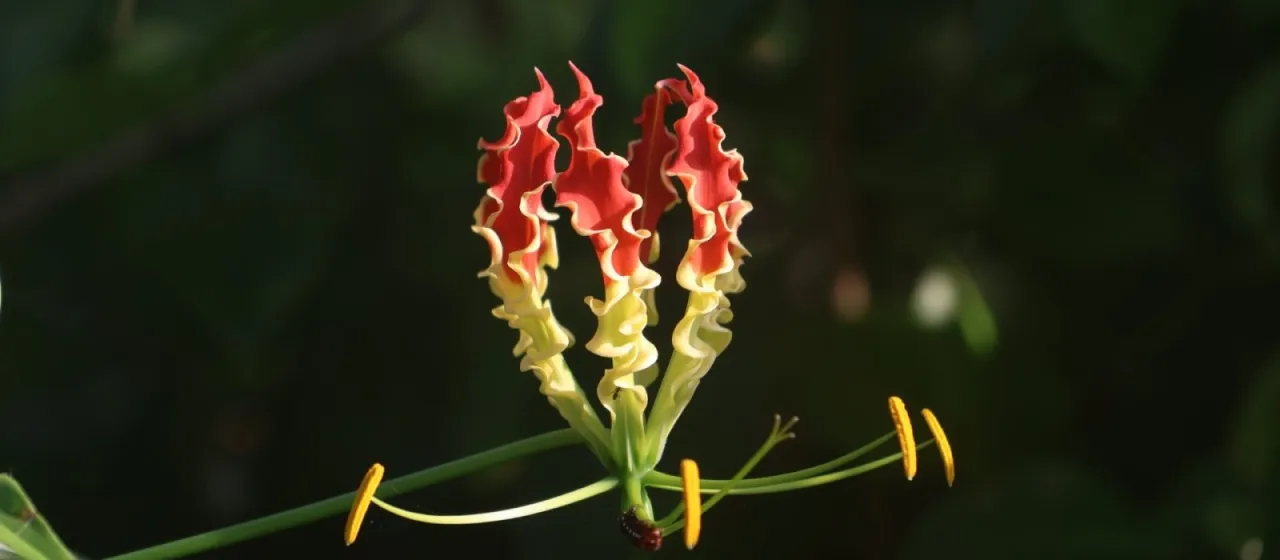
Description
Gloriosa superba L., commonly known as the Gloriosa lily or flame lily, is a perennial herbaceous climber belonging to the Colchicaceae family. The plant is distinguished by its unique climbing mechanism, utilizing tendrils at the tips of its leaves to scale supports. It is highly valued globally for its exotic, flame-like flowers which provide significant ornamental appeal.
Native to tropical and subtropical regions of Africa and Asia, the plant thrives in environments characterized by high humidity and consistent warmth. In agricultural practices, it is cultivated primarily in specialized nurseries and warm-climate zones. Its natural habitat includes grasslands, thickets, and forest edges where it can easily access light and support for its vigorous growth.
Botanically, the species is characterized by its tuberous root system, which serves as a reservoir for nutrients during the dormant season. The leaves are sessile and lance-shaped, arranged alternately or in whorls along the climbing stem. The flowers possess six tepals that are characteristically reflexed, showcasing colors that transition from bright yellow to vibrant crimson as they mature.
The cultivation of Gloriosa superba requires well-drained, nutrient-rich soil with a slightly acidic to neutral pH level. In an agricultural setting, irrigation must be strictly managed to prevent waterlogging, which often leads to the rotting of the tubers. Full sun to partial shade is essential, provided that the light is sufficiently intense to encourage the development of flower buds during the growing season.
Beyond its ornamental use, Gloriosa superba is commercially important as a source of colchicine, an alkaloid used extensively in medical treatments for gout and in biological research. Despite its value, the plant is highly toxic if ingested, necessitating careful handling and safety protocols during harvesting and processing in commercial agricultural operations.
- Common pests include aphids, spider mites, and mealybugs.
- Fungal root rots occur in poorly drained substrates.
- Requires robust vertical trellises for optimal development.
- Dormancy management is crucial for subsequent flowering success.