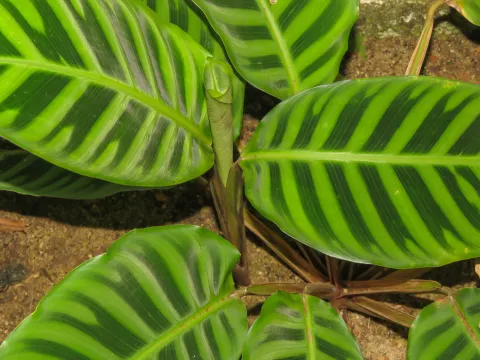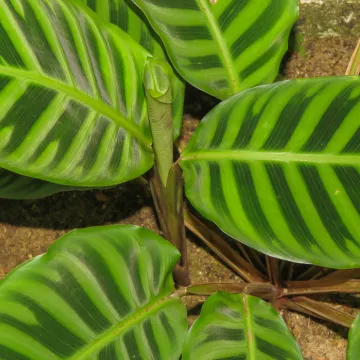

Goeppertia zebrina
Goeppertia zebrina
Description
Goeppertia zebrina, commonly known as the zebra plant, belongs to the family Marantaceae. This perennial plant is highly regarded in the horticultural industry for its striking, velvety foliage adorned with deep green, zebra-like patterns that make it a centerpiece in interior landscaping.
The plant originates from the tropical rainforests of Brazil. Within its natural range, it thrives in the understory of dense forests, where it benefits from consistent humidity, diffused light, and stable ambient temperatures, which define its ecological requirements in cultivation.
Botanically, the species is characterized by large, ovate, velvety leaves that can reach lengths of up to 60 centimeters. The leaves feature a dark green striped pattern on the upper surface, while the underside often displays a deep purple or maroon hue. The plant spreads via a rhizomatous root system.
Agricultural and horticultural requirements for Goeppertia zebrina focus on replicating its native environment. It demands a well-draining, slightly acidic soil medium rich in organic matter. Optimal growth occurs at temperatures between 20°C and 25°C, with strict avoidance of cold drafts and low humidity levels, which can lead to leaf curling.
In terms of economic and practical use, the plant is exclusively utilized for decorative purposes in residential and commercial spaces. While it is a robust indoor specimen, it is susceptible to specific pathogens and pests. Regular monitoring for spider mites, mealybugs, and root rot is essential to maintain the aesthetic quality and health of the plant.
Photo gallery